How to Choose a Linear Actuator
OEM buyer guide to choosing an electric linear actuator—force, stroke, voltage, IP rating, duty cycle, feedback and mounting—with Elerover series recommendations.
· Elerover manufacturer guide
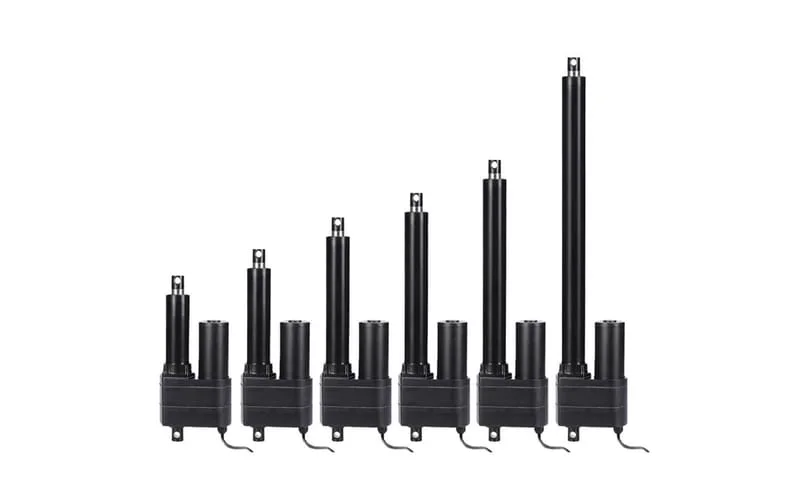
Choosing an electric linear actuator is a specification process, not a shopping browse. For OEM and industrial buyers, the wrong force, voltage, IP rating or duty cycle shows up later as stalled motors, overheating, seal failures or costly redesigns. This guide walks through the decision sequence Elerover uses when shortlisting a series for a customer project—then points you into the live Linear Actuator catalog where published Max Load, Working Voltage and Protection Class values are the source of truth.
Elerover manufactures electric linear actuators in Changzhou, China, for global B2B partners: compact micro platforms for furniture and light OEM mechanisms, industrial IP65/IP66 families for outdoor machines, sealed tubular designs for wet environments, and high-force platforms for hatches and heavy fixtures. Use this page to define your requirement cleanly, then open the matching category, series and product pages before you freeze the mechanical design.
What an electric linear actuator does
An electric linear actuator converts rotary motor motion into push/pull travel through a screw (lead screw or ball screw) and gearbox. Compared with pneumatic cylinders, electric actuators bring controllable speed, holding force without continuous air, and simpler integration into DC control systems. Compared with hydraulic cylinders, they avoid fluid leaks and pump stations—but they have practical force and duty limits. When loads exceed what a screw actuator can sustain, Elerover also supplies electric hydraulic actuators.
For selection, treat the actuator as a mechanical + electrical component:
- Mechanical: force, stroke, retracted/extended length, mounting, side-load tolerance, noise
- Electrical: voltage, current (running and stall), control interface, feedback
- Environmental: IP rating, temperature, dust, wash-down, outdoor UV/humidity exposure
- Lifecycle: duty cycle, expected cycles per day, maintenance access
Selection criteria checklist (OEM order)
Work through these criteria in order. Changing force late is expensive; changing connector color is not.
1. Force (push / pull)
Estimate the maximum axial load the rod must move, including friction, hinge geometry and acceleration. Apply a safety factor (commonly 1.5–2.0, higher for shock). Convert kilograms to newtons (N ≈ kg × 9.8). Prefer the Max Load value on the product specification table over marketing slogans. See How to calculate linear actuator force for a worked method, and the heavy-duty guide when you are above roughly 6,000 N.
2. Stroke and installation length
Stroke is the travel you need. Installation length (retracted) often constrains packaging. Confirm both on the product page and in the dimensional drawing. Tubular platforms such as the waterproof IP68 tubular series are often chosen when envelope space is tight.
3. Speed
Speed falls as force rises on the same platform. Specify no-load and loaded speed targets early. If you need both high force and high speed, you may be looking at a different series—or accepting a longer cycle time.
4. Voltage and current
Most Elerover platforms use 12V DC or 24V DC. Longer cables and higher current budgets often favor 24V. Confirm Working Voltage on the datasheet and size cables for stall current, not only running current. Details: 12V vs 24V linear actuator.
5. IP rating / environment
Indoor furniture can tolerate lower IP. Outdoor agriculture, solar assists and wash-down duty need IP65/IP66 or sealed tubular designs. Always trust Protection Class on the specs table. Details: IP65 vs IP68 linear actuator.
6. Duty cycle
Duty cycle is powered time versus rest. Exceeding the rating overheats the motor and shortens life. High force + high duty is a common OEM failure mode—flag it early when you contact Elerover.
7. Mounting and side load
Clevis, trunnion and rear mounts must stay coaxial with the load path. Side load reduces effective capacity and damages seals. If your mechanism introduces off-axis force, redesign the linkage before upsizing the actuator blindly.
8. Feedback and multi-actuator control
Hall sensors or potentiometers support positioning and synchronization. Multi-actuator furniture or industrial frames often need a synchronous controller. Decide feedback needs before you freeze the wiring harness.
Comparison table: compact vs industrial vs heavy-duty vs tubular
| Factor | Compact (e.g. SLA-T01) | Industrial mid-force (e.g. SLA08) | Heavy-duty (e.g. SLA-12K) | Sealed tubular (e.g. SLA16M family) |
|---|---|---|---|---|
| Typical force class | Low hundreds of N | Up to ~8,000 N | Up to ~12,000 N+ | Model-dependent; confirm Max Load |
| Common voltages | 12V / 24V | 12V / 24V | 12V / 24V | 12V / 24V |
| Typical IP theme | Indoor / protected | IP65 industrial outdoor | Outdoor industrial | Sealed wet / outdoor OEM |
| Best fit | Furniture, windows, light OEM | Farm, solar assists, machines | Hatches, platforms, vehicles | Compact sealed envelopes |
| Start here | SLA-T01 series | SLA08 8000N | SLA-12K 12000N | Waterproof tubular |
This table is a shortlisting tool. Final selection still requires reading the product specification table.
Engineering examples
Example A — Recliner / light OEM mechanism
- Load: ~150–250 N after friction
- Stroke: 100–200 mm
- Environment: indoor
- Voltage: 12V or 24V furniture supply
- Feedback: often hall for sync across two actuators
Path: Linear Actuator category → SLA-T01 series → model such as SLA-T01 for robot / compact OEM. Pair with a controller if two rods must travel together.
Example B — Outdoor hatch or agricultural cover
- Load: several kN with wind and ice margin
- Stroke: 150–400 mm
- Environment: rain, dust → IP65/IP66 class
- Voltage: 12V vehicle or 24V industrial
Path: Category → SLA08 8000N series or SLA-12K → confirm Protection Class and Max Load on the chosen stroke model, for example SLA-12K heavy-duty actuator.
Example C — Compact sealed outdoor OEM
- Envelope: limited diameter / clean exterior
- Environment: wet or coastal-adjacent
- Force: moderate; confirm per model
Path: Category → waterproof tubular series → SLA16M (verify Protection Class on the specs table).
Example D — General industrial starting point
When you need a mainstream industrial actuator without extreme force, evaluate SLA01 as a documented baseline, then move up to SLA03/SLA08 if Max Load is insufficient.
Applications by industry
| Application | What usually drives selection | Elerover starting point |
|---|---|---|
| Smart furniture / desks / recliners | Noise, sync, compact stroke | SLA-T01 + controllers |
| Medical beds / care chairs | Smooth motion, duty, safety factor | Compact/industrial series with confirmed duty |
| Agriculture / outdoor covers | IP65+, force margin for wind | SLA08, SLA08B |
| Solar tracker assists | Outdoor IP, stroke length, voltage | Industrial IP65 platforms; verify stroke models |
| Vehicle hatches / platforms | High force, 12V/24V, outdoor | SLA-12K |
| Architectural / sealed OEM | Compact sealed body | Tubular series |
Browse the broader applications overview for context, then return to product pages for hard numbers.
Recommended Elerover product path
Follow this internal linking path on every serious RFQ:
- Category: Linear Actuator — manufacturer range and series index
- Series: shortlist 1–2 series from the comparison table above
- Products: open stroke-specific models and read Max Load, Working Voltage, Protection Class, duty notes and drawings
- Controllers / related: add a controller when synchronization is required
- Contact: send load diagram, stroke, voltage, IP, duty cycle and quantity via Contact
OEM capabilities on supported platforms typically include stroke adjustment, voltage options, hall/potentiometer feedback, cable and connector customization, and mounting-end changes. Elerover will not invent ratings beyond the published catalog—factory confirmation is part of professional OEM practice.
Common selection mistakes
- Sizing only for static weight — ignoring friction, angle and acceleration.
- Trusting the product title for IP — always read Protection Class.
- Ignoring duty cycle — especially on high-force outdoor machines.
- Underestimating cable voltage drop — particularly on long 12V runs.
- Leaving feedback for “phase two” — harness changes become expensive.
- Allowing side load — mounts must stay aligned with the rod axis.
Lead screw vs ball screw (when it matters)
Most OEM electric actuators in Elerover’s industrial range use lead-screw architectures optimized for cost, holding force and intermittent duty. Ball-screw designs can offer higher efficiency and different wear characteristics, but they are not automatically “better” for every hatch or furniture mechanism. For buyer decisions:
- Prefer the platform whose published Max Load, speed and duty match the cycle—not a generic screw-type preference
- Ask whether back-driving risk matters (vertical loads that can push the rod when unpowered)
- Confirm self-locking behavior expectations with the series datasheet and your brake/control strategy
If your application needs continuous high-cycle positioning at high efficiency, say so in the RFQ. Elerover will map you to a suitable platform or explain when an alternative architecture is more honest than forcing a standard industrial screw unit.
Installation and integration notes manufacturers care about
Buyers often freeze the actuator SKU before the mechanical interface is ready. Reverse that order:
- Define pivot points and stroke in CAD with tolerance stack-up
- Keep the actuator axis aligned with the load path through the full travel
- Provide strain relief for cables so motion does not pull on glands
- Place limit of travel where hard stops will not shock the gearbox repeatedly
- Document lubrication and inspection intervals for outdoor machines
- If two actuators share a load, plan a controller and feedback strategy before wiring harness release
These steps prevent the “correct Max Load, wrong integration” failures that look like product defects in the field.
RFQ template (copy into your email)
Use this structure when contacting Elerover:
- Company / industry / annual quantity
- Motion description (photo or sketch)
- Mass or force estimate + safety factor used
- Stroke and max retracted length
- Speed target under load
- Voltage and cable length
- IP / cleaning / outdoor exposure
- Duty cycle (seconds on / seconds off, cycles per day)
- Feedback needed? (none / hall / potentiometer)
- Connector or cable preferences
- Target SOP date
Send via Contact. Clear inputs produce faster, more accurate series recommendations.
How this guide connects to other Elerover resources
- Voltage deep dive: 12V vs 24V linear actuator
- Force math: How to calculate linear actuator force
- Sealing: IP65 vs IP68 linear actuator
- High force: Heavy duty linear actuator guide
- Industry context: Applications
- Certificates: Resources hub (RoHS / CE downloads)
Read the deep dive that matches your biggest uncertainty, then return to the category → series → product path.
Manufacturer next step
If you already know force, stroke, voltage and environment, open the Linear Actuator category, pick a series, then request confirmation. If you are still defining the mechanism, send a sketch and cycle description—Elerover’s sales-engineering path is built for OEM buyers who need a clear map from requirement to published series. Factory confirmation protects your BOM: we recommend against freezing drawings on assumed ratings that are not printed on the product specification table.
FAQ
What is the first specification to fix when choosing a linear actuator?
Start with force (push and pull including safety factor and dynamics), then stroke, voltage, duty cycle and IP rating. Mounting geometry and feedback come next for OEM integration.
Should I oversize the actuator force rating?
Yes—size for worst-case dynamic load, side load and a safety margin, not only the static product weight. Share your duty cycle with Elerover so we can recommend an appropriate force class from published Max Load values.
When do I need a waterproof linear actuator?
Choose higher IP ratings for outdoor, agricultural, marine-adjacent or wash-down environments. Confirm the Protection Class on the product specification table rather than marketing titles alone.
How do duty cycle and force interact?
High force plus high duty cycle increases motor and gearbox heat. If your cycle is aggressive, you may need a larger force class, a lower duty rating, or an electro-hydraulic option—confirm with the series datasheet.
Do I need hall-sensor feedback?
Use hall or potentiometer feedback when you need position awareness, soft stops, synchronization across multiple actuators, or closed-loop control. Simple open/close travel often works with limit switches only.
Can Elerover customize stroke and connectors?
On supported platforms, OEM programs can adjust stroke, voltage options, feedback, cable/connector style and mounting ends. Send annual volume and drawings via Contact for factory confirmation.
More OEM guides
- 12V vs 24V Linear Actuator OEM comparison of 12V and 24V DC electric linear actuators—current draw, cable sizing, noise, controllers and when each voltage wins for industrial projects.
- Heavy Duty Linear Actuator Guide OEM guide to heavy-duty electric linear actuators—force classes from 6,000N to 12,000N+, IP ratings, outdoor duty and Elerover high-force series recommendations.
- How to Calculate Linear Actuator Force OEM method to calculate electric linear actuator force—static load, friction, angle, dynamics and safety factor—mapped to Elerover force classes and series.
- IP65 vs IP68 Linear Actuator OEM guide to IP65 vs IP68 (and nearby ratings) for electric linear actuators—dust, water, outdoor duty—and how to read Elerover Protection Class specs.