IP65 vs IP68 Linear Actuator
OEM guide to IP65 vs IP68 (and nearby ratings) for electric linear actuators—dust, water, outdoor duty—and how to read Elerover Protection Class specs.
· Elerover manufacturer guide
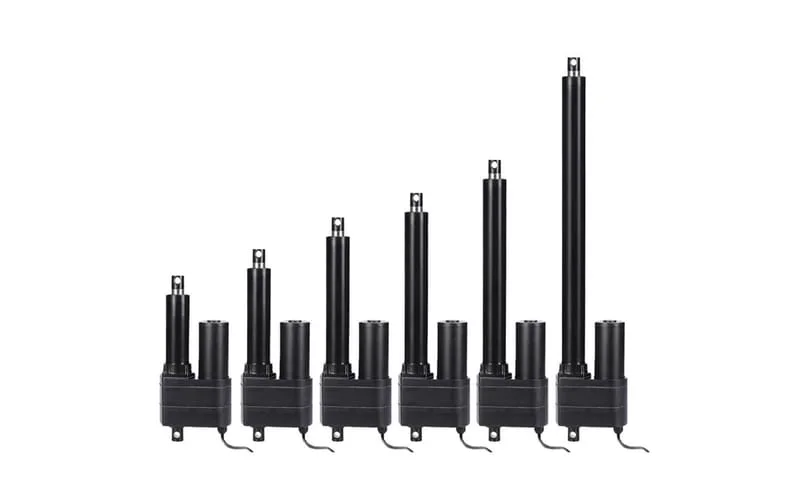
Ingress protection (IP) ratings describe how well an enclosure resists dust and water. For electric linear actuators, the wrong IP choice is a leading cause of outdoor and wash-down field failures—corroded boards, seized screws, swollen seals and warranty disputes. This OEM guide explains IP65 vs IP68 (and nearby ratings) in practical buyer language, then shows how to read Elerover Protection Class values on live product pages.
Elerover manufactures indoor, industrial outdoor and sealed tubular actuator families. Marketing titles sometimes emphasize a product-family theme (for example “IP68 tubular”). Selection must follow the specification table. Start from the Linear Actuator category and confirm Protection Class on every SKU you shortlist.
What IP codes mean (buyer-oriented)
An IP code has two characteristic numerals:
- Solid particle protection (first digit) — dust and foreign objects
- Liquid ingress protection (second digit) — dripping, spraying, jets, immersion
For actuators, you will most often see IP54/IP55 in protected indoor use, IP65/IP66 in outdoor industrial machines, and higher ratings on sealed designs intended for wetter duty. Exact laboratory conditions are defined by IEC 60529; manufacturer immersion depths and durations for IP68 are product-specific.
Comparison table: common actuator IP ratings
| Rating | Dust | Water (typical meaning) | Common OEM context |
|---|---|---|---|
| IP54–IP55 | Limited | Splashing | Protected indoor / light splash |
| IP65 | Dust-tight | Low-pressure water jets | Outdoor enclosures, agriculture, many industrial machines |
| IP66 | Dust-tight | Powerful water jets | Harsher outdoor / wash-adjacent duty |
| IP67 | Dust-tight | Temporary immersion (defined) | Wet environments per datasheet test |
| IP68 | Dust-tight | Continuous immersion (manufacturer-defined) | Sealed outdoor / wet OEM when specified |
| IP69 / IP69K | Dust-tight | High-pressure, high-temperature jets | Specialized wash-down equipment |
“Higher number” is not automatically the right buy. Over-specifying IP can add cost and still fail if connectors or mounting create leak paths.
IP65 vs IP68: how to decide
Choose IP65 when
- The actuator sees rain, dust and occasional hose spray—not continuous immersion
- The machine is outdoor industrial, agricultural or solar-adjacent
- Cable glands and connectors are specified as part of the sealed system
- You need industrial force platforms such as SLA08 or SLA08B
Consider IP66 when
- Spray is powerful or frequent
- Equipment is cleaned more aggressively than light rinse
- The datasheet explicitly publishes IP66 on Protection Class
Consider IP68 (when the specs say so) when
- The design intent includes prolonged wet exposure or immersion conditions defined by the manufacturer
- You are evaluating sealed tubular platforms such as the waterproof tubular series
- You will verify the exact Protection Class on the model page (for example SLA16M)
Consider IP69 / IP69K when
- High-pressure hot wash-down is part of sanitation or process cleaning
- Review models that publish that rating, such as SLA023
Selection criteria beyond the two digits
IP rating alone does not finish the environmental design review:
- Temperature range — seals and grease behave differently in cold/heat
- UV and outdoor aging — housings and cables need suitable materials
- Duty cycle — wet + high duty accelerates wear
- Force and voltage — still sized separately (force guide, 12V vs 24V)
- Connector strategy — mated waterproof connectors vs open splices
- Orientation and drainage — standing water pockets at glands are failure magnets
- Maintenance access — sealed units still need inspection plans
Decision tree for OEM buyers
- Is the actuator indoors and dry? → Lower IP may be acceptable; still protect cable entry.
- Is it outdoors in rain/dust without immersion? → Start with IP65/IP66 industrial platforms.
- Is there regular hose-down? → Prefer IP66+ and confirm connector sealing.
- Is there immersion or continuous wetting? → Only models whose Protection Class explicitly supports it.
- Is there high-pressure hot wash? → Look for IP69/IP69K on the specs table.
- Open the product page and copy the Protection Class into your RFQ checklist.
Engineering examples
Example A — Farm cover actuator
- Environment: dust, rain, occasional spray
- Force: mid to high kN
- Immersion: no
Path: Linear Actuator → SLA08 or SLA08B → confirm Protection Class IP65/IP66 on the chosen stroke model. Combine with force sizing from the force calculation guide.
Example B — Compact architectural / façade OEM
- Envelope: small diameter preferred
- Environment: outdoor wet
- Force: moderate
Path: Category → waterproof tubular series → SLA16M. Read Protection Class carefully; do not assume every tubular SKU shares identical sealing.
Example C — Vehicle hatch, outdoor industrial
- Force: high (see heavy-duty guide)
- Environment: road spray, rain
Path: Category → SLA-12K → SLA-12K heavy-duty actuator. Confirm Max Load and Protection Class together.
Example D — Food / wash-down adjacent equipment
- Cleaning: high-pressure jets
Path: Evaluate models publishing IP69/IP69K such as SLA023, then confirm force and stroke fit.
Applications
| Application | Typical IP emphasis | Notes |
|---|---|---|
| Indoor furniture | Lower IP | Focus on noise and sync |
| Medical indoor | Protected environment | Still manage cleaning chemicals |
| Agriculture | IP65/IP66 | Dust + rain dominate |
| Solar assists | Outdoor IP65+ | Long strokes; verify seals |
| Marine-adjacent | Higher sealing | Confirm immersion claims carefully |
| Wash-down process | IP69 class | Spec-table verification required |
See also the applications overview for industry context.
Name vs specification: manufacturer policy
Elerover’s buyer guidance is explicit:
- Trust Protection Class / IP Rating on the specifications table
- Treat series names as navigation aids, not lab certificates
- If title and specs disagree, ask for confirmation via Contact before PO
This protects OEM programs from assuming immersion capability that a particular stroke model does not publish.
Recommended Elerover product path
- Resource (this guide) → define environment and cleaning method
- Category: Linear Actuator
- Series: SLA08, SLA08B, SLA-12K, waterproof tubular
- Products: verify Protection Class + Max Load + Working Voltage on the SKU
- Contact: include environment photos or cleaning procedure in the RFQ
Sealing is a system: glands, rods and connectors
An actuator housing rating can be undermined by integration details:
- Unmated connectors left open during install or service
- Field-cut cables without proper glands
- Bent rods / side load that damage rod wipers and admit slurry
- Standing water pooled on upward-facing connectors
- Pressure washing aimed at seals not designed for IP69-class jets
- Chemical cleaners incompatible with seal materials
When you RFQ Elerover, describe the cleaning method and connector preference. OEM cable and connector options on supported platforms exist specifically to keep the installed system as sealed as the datasheet implies.
Outdoor aging and maintenance
IP tests are laboratory events; field life also depends on:
- UV exposure on jackets and housings
- Thermal cycling that works seals
- Abrasive dust that wears wipers
- Long idle periods that allow moisture ingress if vents/paths exist
Define inspection intervals for outdoor fleets—especially agricultural and solar installs. A sealed actuator is not “fit and forget” when duty is harsh.
Comparing competitor IP claims (buyer caution)
IP marketing varies across the industry. Professional OEM practice:
- Demand the Protection Class string for the exact SKU
- Ask for the test basis if immersion (IP68) is claimed
- Reject catalog language that only says “waterproof” without a code
- Align cable accessories to the same environmental goal
Elerover’s position is conservative on purpose: the specification table wins. That protects your compliance file when customers audit the BOM.
Failure modes linked to IP mismatch
| Environment reality | Underspecified IP result | Better path |
|---|---|---|
| Rain + dust farm | Board corrosion, grit in screw | IP65/IP66 industrial series |
| Daily hose-down | Water at cable entry | Higher jet rating + sealed connectors |
| Immersion events | Catastrophic ingress | Only SKUs with matching Protection Class |
| Hot high-pressure wash | Seal extrusion / ingress | IP69-class models when published |
| Indoor splash only | Unnecessary cost if over-specified | Right-sized lower IP with protected install |
Integration checklist for sealed installs
- Protection Class copied from product page into drawing notes
- Connector mating sequence defined in work instructions
- Cable strain relief prevents gland leverage
- Mounts keep rod coaxial (protects wipers)
- Orientation avoids persistent water traps where possible
- Cleaning SOP matches the rating (no surprise pressure wash)
- Spare part SKU locked to the same Protection Class
How this guide connects to other resources
- Selection overview: How to choose a linear actuator
- Force: How to calculate linear actuator force
- Voltage for outdoor cable runs: 12V vs 24V
- High-force outdoor machines: Heavy duty guide
- Catalog: Linear Actuator → tubular / SLA08 / SLA08B / SLA-12K series as applicable
Manufacturer next step
Share the real environment—not only the IP code you hope to print on a drawing. Elerover will recommend a series whose published Protection Class matches that environment, then confirm OEM options for connectors and cable glands on supported platforms. Pair this page with How to choose a linear actuator so sealing and force are specified together. Send details via Contact.
FAQ
Is IP68 always better than IP65 for actuators?
IP68 indicates stronger protection against continuous water immersion under manufacturer-defined conditions, but you must still match the rating to your real environment. IP65 may be sufficient for rain and dust; immersion or wash-down may need higher ratings listed on the product page.
Why do some product names say IP68 while the specification table shows another IP value?
Always trust the Protection Class / IP Rating field on the product specifications table. If name and specs disagree, use the specification value and ask Elerover to confirm before ordering.
What IP rating is typical for agricultural equipment?
Outdoor agricultural and dusty environments often use IP65/IP66 industrial actuators. Confirm sealing, connectors and duty cycle on the selected model.
Does a higher IP rating increase force capacity?
No. IP rating describes ingress protection, not Max Load. Size force separately, then select a sealed platform that meets both force and environment.
Are connectors included in the IP rating?
Sealing depends on the full assembly—housing, rod seals, cable gland and mated connector. A high-IP actuator with an open splice can still fail in the field.
When should I look at IP69 / IP69K actuators?
When high-pressure, high-temperature wash-down is part of the process. Review models that publish IP69/IP69K on the specs table and confirm test conditions with Elerover.
More OEM guides
- 12V vs 24V Linear Actuator OEM comparison of 12V and 24V DC electric linear actuators—current draw, cable sizing, noise, controllers and when each voltage wins for industrial projects.
- Heavy Duty Linear Actuator Guide OEM guide to heavy-duty electric linear actuators—force classes from 6,000N to 12,000N+, IP ratings, outdoor duty and Elerover high-force series recommendations.
- How to Calculate Linear Actuator Force OEM method to calculate electric linear actuator force—static load, friction, angle, dynamics and safety factor—mapped to Elerover force classes and series.
- How to Choose a Linear Actuator OEM buyer guide to choosing an electric linear actuator—force, stroke, voltage, IP rating, duty cycle, feedback and mounting—with Elerover series recommendations.