Heavy Duty Linear Actuator Guide
OEM guide to heavy-duty electric linear actuators—force classes from 6,000N to 12,000N+, IP ratings, outdoor duty and Elerover high-force series recommendations.
· Elerover manufacturer guide
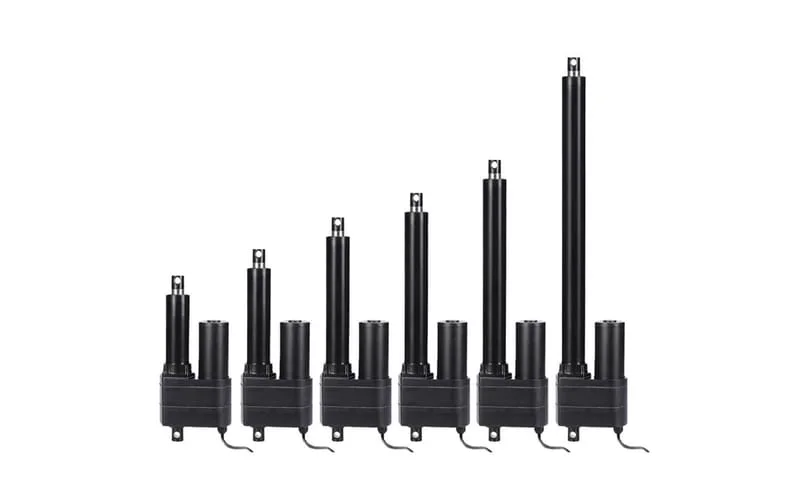
Heavy-duty electric linear actuators move hatches, platforms, solar structures, dump assists and industrial fixtures where compact furniture actuators are not enough. For OEM buyers, “heavy duty” is not a vibe—it is a force class, an environmental rating and a duty-cycle commitment. This guide explains how Elerover defines high-force electric platforms, how to shortlist series from 6,000 N upward, and when to step into electric hydraulic actuators.
Browse the manufacturer range under Linear Actuator. Published Max Load, Working Voltage and Protection Class on each product page remain authoritative.
What “heavy duty” means in practice
In Elerover’s catalog language, heavy-duty selection usually implies:
- Force typically 6,000 N and above
- Industrial housings and outdoor-capable IP ratings (often IP65/IP66 class—confirm per SKU)
- 12V/24V DC options (sometimes higher on selected models)
- Attention to mounts, manual override options and cable current
- Realistic duty cycle planning (high force + high duty creates heat)
If your calculated demand is only a few hundred newtons, start with compact series such as SLA-T01 instead—see How to choose a linear actuator.
Technical building blocks of high-force actuators
High-force electric actuators still use motor + gearbox + screw, but everything is scaled:
- Stronger screws and nuts
- Higher-ratio or heavier gear trains
- Larger motors and higher current
- Robust end mounts and housings
- Seals suited to outdoor industrial duty
Trade-offs are real: speed usually falls as force rises; stall current rises; cable and controller design become first-class engineering tasks. Pair this page with force calculation and 12V vs 24V.
Selection criteria for heavy-duty OEM projects
- F_required with worst-case geometry and safety factor
- Stroke + retracted length for the envelope
- Speed target under load (not only no-load brochure speed)
- Voltage / current / cable length
- IP / outdoor environment (IP guide)
- Duty cycle and ambient temperature
- Side-load control via guides and coaxial mounts
- Feedback / control if positioning or multi-actuator sync is required
- Service access and any manual override needs
Skip any of these and high-force projects fail in the field even when Max Load looked “big enough” on paper.
Comparison table: Elerover high-force starting points
| Series / model | Force class | Typical use | Start URL |
|---|---|---|---|
| SLA03 6000N | Up to 6,000 N | Gates, hatches, mid industrial | Series page |
| SLA08B 7000N | Up to 7,000 N class | Industrial doors / outdoor machines | Series page |
| SLA08 8000N | Up to 8,000 N | Lifts, construction, solar assists | Series page |
| SLA-12K 12000N | Up to 12,000 N | Heavy hatches, vehicles, outdoor duty | Series page |
| SLA-17K industrial model | Up to 17,000 N class | Top electric force class in standard catalog | Product page |
| Electric hydraulic category | Higher force / different architecture | When screw platforms are not enough | Category page |
Comparison: electric screw vs electro-hydraulic
| Factor | High-force electric screw | Electric hydraulic |
|---|---|---|
| Force ceiling | High, but finite per platform | Higher class available |
| Cleanliness | No hydraulic fluid | Fluid system considerations |
| Speed at high force | Often slower | Application-dependent |
| Maintenance | Electromechanical wear | Fluid + electromechanical |
| Best when | Force fits published Max Load | Demand exceeds screw practicality |
Do not force a screw actuator into a hydraulic problem. Compare published ratings honestly.
Engineering examples
Example A — 8 kN outdoor hatch
- F_required ≈ 7,500–8,000 N after SF
- Environment: rain/dust
- Stroke: ~200 mm
Path: Linear Actuator → SLA08 8000N → SLA08 200mm heavy-duty hatch model. Confirm Protection Class and Working Voltage on that page.
Example B — Construction / industrial mover ~8 kN
- Short stroke, industrial outdoor
- Dual voltage interest
Path: Category → SLA08 → SLA08 100mm construction machinery model.
Example C — 12 kN vehicle / equipment hatch
- High force, outdoor spray
- 12V or 24V vehicle/industrial supply
Path: Category → SLA-12K → SLA-12K heavy-duty DC actuator. Size cables for stall current; see voltage guide.
Example D — Beyond 12–17 kN electric class
- Calculated demand exceeds comfortable screw margin
- Or duty is too aggressive for heat
Path: Evaluate electric hydraulic actuators and request factory mapping via Contact.
Applications
| Application | Why heavy duty | Elerover emphasis |
|---|---|---|
| Equipment hatches | Weight + wind + ice | SLA08 / SLA-12K + IP confirm |
| Lifting platforms | Vertical mass + SF | Force calc + duty cycle |
| Agricultural machinery | Outdoor seals + force | IP65/IP66 industrial series |
| Solar tracker assists | Long stroke outdoor | Industrial IP + stroke SKU check |
| Dump / trailer assists | Shock + high force | High Max Load + mounts |
| Industrial doors | Cycles + environment | SLA08B / SLA08 class |
For broader industry context, see Applications.
Design checks before you buy
- Force calculation — How to calculate linear actuator force
- IP rating — IP65 vs IP68
- Voltage / current — 12V vs 24V
- Duty cycle — state on-time vs rest in the RFQ
- Mounting — coaxial loads only; add guides if needed
- Control — add a controller for synchronized multi-actuator systems
Recommended Elerover product path
Follow the authority path on every heavy-duty RFQ:
- Resource (this guide) — confirm you are truly in heavy-duty territory
- Category: Linear Actuator
- Series: SLA03 → SLA08B/SLA08 → SLA-12K (escalate by Max Load)
- Products: open stroke-specific SKUs and copy Max Load / Voltage / Protection Class into your BOM notes
- Adjacent category: Electric hydraulic if needed
- Contact: Contact Elerover for OEM solutions
OEM customization on supported high-force platforms may include stroke, feedback, connectors and mounting ends—subject to factory confirmation and annual volume.
Structural integration for high force
As Max Load rises, the machine structure becomes part of the actuator specification:
- Mounting brackets must carry rated loads with fatigue margin
- Pins and clevises need correct diameters and retainers
- Frame stiffness prevents racking that creates side load
- Welding and fastener grades should match outdoor duty where applicable
- Hard stops should not dump full kinetic energy into the gearbox every cycle
If the structure deflects, the actuator sees bending. Many “weak actuator” complaints are structural. Send photos of mounts with your RFQ so Elerover can flag obvious side-load risks early.
Thermal and duty planning at high force
High current and gearbox losses produce heat. Outdoor sun load raises ambient further. Practical controls:
- Respect published duty guidance for the series
- Avoid continuous stall against end stops
- Use ramped motion profiles in the controller
- Allow cooling time between dense cycle bursts
- Consider a higher class platform if ambient is extreme
State ambient temperature range in the RFQ for agricultural, desert solar or enclosed engine-bay installs.
Control architecture options
Heavy-duty projects often outgrow simple reversing switches:
- Relay or contactor reversing for basic travel
- Current-limited controllers for stall protection
- Hall-feedback positioning for repeatable stops
- Synchronous control for dual-actuator hatches via a controller
- Interlocks with machine safety systems (buyer’s responsibility to integrate)
Define the control architecture before harness release. Retrofitting feedback wires into a sealed high-force unit in the field is expensive.
Cost drivers OEM buyers should expect
Price and lead time on heavy-duty platforms move with:
- Force class and stroke length
- IP / sealing package
- Feedback and connector options
- Annual volume and OEM customization depth
- Testing or special labeling requirements
The cheapest SKU that barely meets Max Load is not always the lowest lifetime cost if duty and environment are harsh. Elerover’s recommendation optimizes for published capability and manufacturability—not only unit price.
Spares and fleet standardization
For fleets (agriculture, vehicles, multi-site machines):
- Standardize on one series family where possible
- Keep stroke variants documented
- Lock voltage and connector types
- Stock critical seals/harness parts per your service model
- Avoid mixing “almost equivalent” Max Load SKUs without a change record
Point service teams at the product URL, not only a nickname on a hatch.
How this guide connects to other resources
- Force math: How to calculate linear actuator force
- Voltage/current: 12V vs 24V linear actuator
- Sealing: IP65 vs IP68 linear actuator
- General checklist: How to choose a linear actuator
- Category hub: Linear Actuator
- Beyond screw platforms: Electric hydraulic actuators
Manufacturer next step
Send load geometry, stroke, voltage, IP environment, duty cycle and quantity. Elerover will recommend the lowest force class that still clears F_required with margin—oversizing blindly wastes cost and current budget; undersizing creates stalls. That is the manufacturer standard for professional heavy-duty selection. Start the conversation at Contact and include links to any candidate product pages you already shortlisted.
FAQ
What force counts as a heavy-duty linear actuator?
In Elerover’s catalog, heavy-duty typically starts around 6,000N and extends through 8,000N, 12,000N and higher industrial models. Always use the Max Load value on the product page.
Do heavy-duty actuators always need 24V?
No. Many high-force platforms offer 12V and 24V. Higher force usually increases current—verify cable sizing and supply capacity for your chosen voltage.
When should I consider an electric hydraulic actuator instead?
When required force or duty exceeds practical electric-screw platforms, evaluate Elerover electric hydraulic actuators. Compare published load ratings rather than assuming one technology fits every lift.
Can heavy-duty actuators be used outdoors?
Yes—many industrial platforms target outdoor IP65/IP66 class environments. Confirm Protection Class on the specification table for the exact stroke model.
What information should I send for a heavy-duty OEM quote?
Load diagram or weight, worst-case geometry, stroke, voltage, IP/environment, duty cycle, cable length and annual quantity. Photos of the mechanism help Elerover validate side-load risk.
Does a higher Max Load automatically mean a slower actuator?
Often yes on the same technology—higher force platforms typically trade speed. Confirm no-load and loaded speed on the product page for your stroke model.
More OEM guides
- 12V vs 24V Linear Actuator OEM comparison of 12V and 24V DC electric linear actuators—current draw, cable sizing, noise, controllers and when each voltage wins for industrial projects.
- How to Calculate Linear Actuator Force OEM method to calculate electric linear actuator force—static load, friction, angle, dynamics and safety factor—mapped to Elerover force classes and series.
- How to Choose a Linear Actuator OEM buyer guide to choosing an electric linear actuator—force, stroke, voltage, IP rating, duty cycle, feedback and mounting—with Elerover series recommendations.
- IP65 vs IP68 Linear Actuator OEM guide to IP65 vs IP68 (and nearby ratings) for electric linear actuators—dust, water, outdoor duty—and how to read Elerover Protection Class specs.