Stroke, Force, Speed Trade-offs: What You Must Know Before Ordering a 12V Linear Actuator
Why stroke, force and speed cannot all be maximized on a 12V linear actuator—with real SLA08B 7000 N force–speed data, selection steps, common mistakes, and an order checklist.
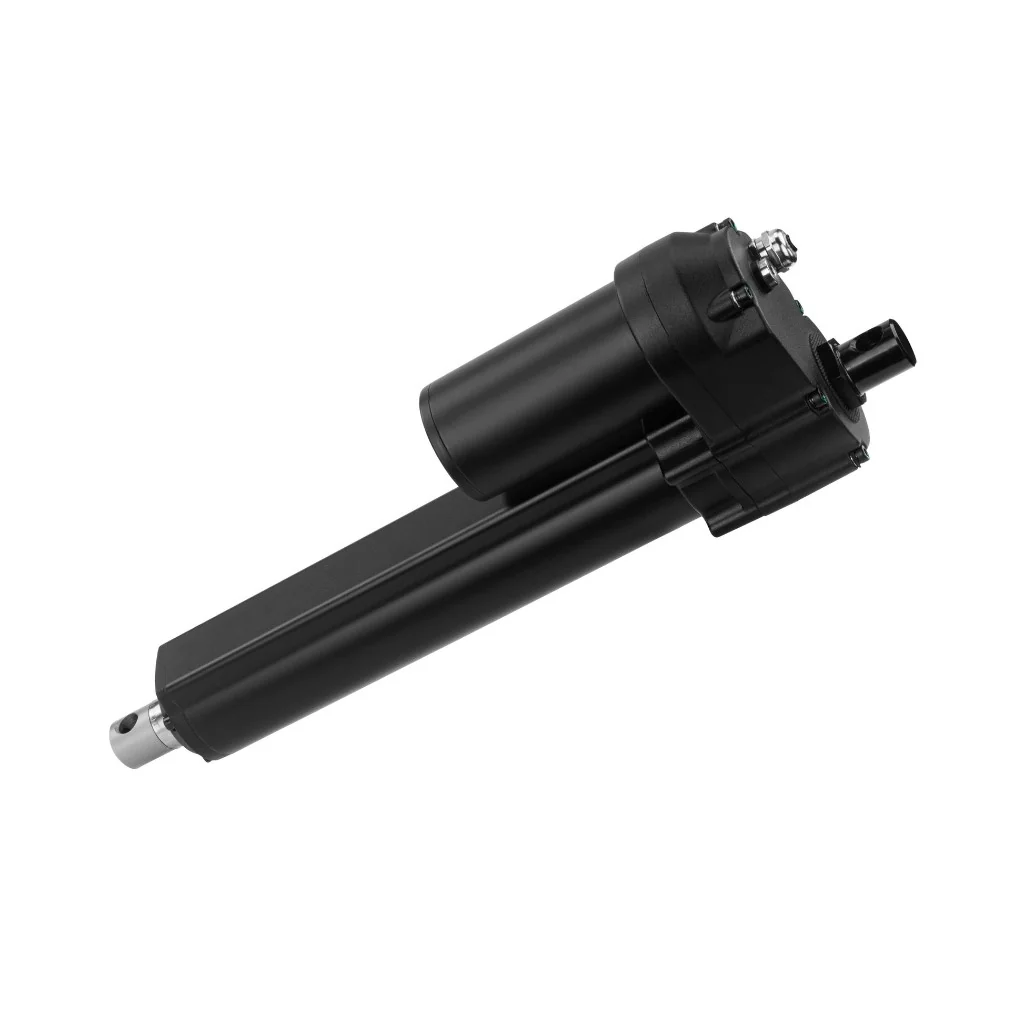
Buyers often want three things at once from a 12V linear actuator: long stroke, high force, and fast speed.
In practice these three parameters work against each other. Choosing without understanding the trade-offs leads to stalled actuators, overheating, or machines that move too slowly under real load.
This guide explains the physical limits, shows real performance data from a 7000 N class actuator, and gives a clear method to select the right combination before you place an order.
Why Stroke, Force and Speed Cannot Be Maximized Together
A linear actuator converts motor torque into linear motion through a gearbox and screw.
Power is limited. When you demand more force, speed must drop. When you demand higher speed, available force falls. Longer stroke adds mass and friction, which further reduces net performance and increases retracted length.
Ignoring this relationship is the most common reason actuators fail in the field or fail to meet cycle-time targets.
Real Performance Data – SLA08B 7000 N Series
The table below comes from the SLA08B series (IP65, 12 V / 24 V / 36 V / 48 V, parallel motor design).
It shows exactly how force and speed trade off.
| No-load speed | Full-load speed | Dynamic thrust | Self-locking force |
|---|---|---|---|
| 5.5 mm/s | 4.0 mm/s | 7000 N / 700 kg / 1570 lbs | 10 000 N |
| 8.5 mm/s | 7.0 mm/s | 7000 N / 700 kg / 1570 lbs | 10 000 N |
| 11.0 mm/s | 9.5 mm/s | 5000 N / 500 kg / 1120 lbs | 8000 N |
| 17.0 mm/s | 14.0 mm/s | 4000 N / 400 kg / 900 lbs | 7000 N |
| 22.0 mm/s | 18.0 mm/s | 3000 N / 300 kg / 670 lbs | 5000 N |
| 35.0 mm/s | 28.5 mm/s | 2000 N / 200 kg / 450 lbs | 4000 N |
Key observations:
- Maximum force (7000 N) is only available at the two slowest speeds.
- At 35 mm/s the usable force drops to 2000 N.
- Self-locking force is always higher than dynamic thrust, which is useful for holding position without power.
Stroke options on this series range from 50 mm to 600 mm (custom up to 1000 mm).
Retracted length increases with stroke. For the 450 mm version the retracted length is 700 mm.
Duty cycle is 25 %. Continuous running beyond the rated duty will cause overheating regardless of the force-speed combination you choose.
How to Choose the Right Combination for Your Application
Follow these four steps:
- Calculate the real peak force required (including safety factor, side loads, and friction).
- Decide the maximum acceptable travel time. Convert that into the minimum speed you need.
- Look up the force available at that speed in a real performance table.
- Check whether the required stroke still leaves enough force margin and fits the available space (retracted + extended length).
Example – solar tracker or agricultural implement:
You need 450 mm stroke and must move in under 30 seconds under a 400 kg load.
Required average speed ≈ 15 mm/s.
From the table, 17 mm/s no-load gives 4000 N (≈ 400 kg) at full load. This combination works.
If you had insisted on 30 mm/s, available force would fall to roughly 2000–2500 N and the actuator would stall.
Common Mistakes That Come from Ignoring Trade-offs
- Ordering the highest force rating and the highest speed at the same time → the actuator never delivers the claimed force.
- Selecting stroke first and only checking force afterward → retracted length becomes too long for the machine.
- Using catalogue “max force” without looking at the speed column → real-world performance is far lower.
- Forgetting duty cycle → even a correctly sized force-speed combination overheats in continuous use.
- Ignoring self-locking force → the load drifts when power is removed.
Practical Checklist Before You Order
- Peak force needed (with safety factor)
- Maximum allowed travel time → minimum speed
- Required stroke and resulting retracted/extended length
- Available voltage (12 V / 24 V / 36 V / 48 V)
- IP rating required for the environment (SLA08B is IP65)
- Duty cycle of the real application
- Need for position feedback (Hall, potentiometer, etc.)
Next Step
Send your required stroke, peak load, desired travel time (or speed), voltage, and application.
Open the SLA08B 7000 N linear actuator product page and submit an OEM quote with your load case. You will receive a matched configuration from the SLA08B 7000 N series (or another suitable series), the exact performance point on the force-speed curve, and a reference price.
Understanding the stroke–force–speed trade-off before ordering is the fastest way to avoid costly redesigns and field failures.
FAQ
Why can't I maximize stroke, force and speed at the same time?
A linear actuator has limited motor power. Higher force requires lower speed; higher speed reduces available force. Longer stroke adds mass and friction, which further cuts net performance and increases retracted length.
At what speed does the SLA08B deliver 7000 N?
Maximum dynamic thrust of 7000 N is available only at the two slowest options (about 5.5 mm/s and 8.5 mm/s no-load). At 35 mm/s no-load, usable force drops to about 2000 N.
What duty cycle does the SLA08B use?
Duty cycle is 25%. Continuous running beyond the rated duty causes overheating regardless of the force–speed combination you choose.
What IP rating does the SLA08B have?
SLA08B is rated IP65. Confirm whether that matches your outdoor dust, rain or wash-down exposure before ordering.
How do I pick the right force–speed point?
Calculate peak force with safety factor, convert maximum travel time into minimum speed, look up force at that speed in a real table, then check stroke, retracted length and duty cycle still fit.
What should I send for a configuration recommendation?
Share required stroke, peak load, desired travel time or speed, voltage, IP need, quantity and any mounting or feedback requirements.
المزيد من المقالات
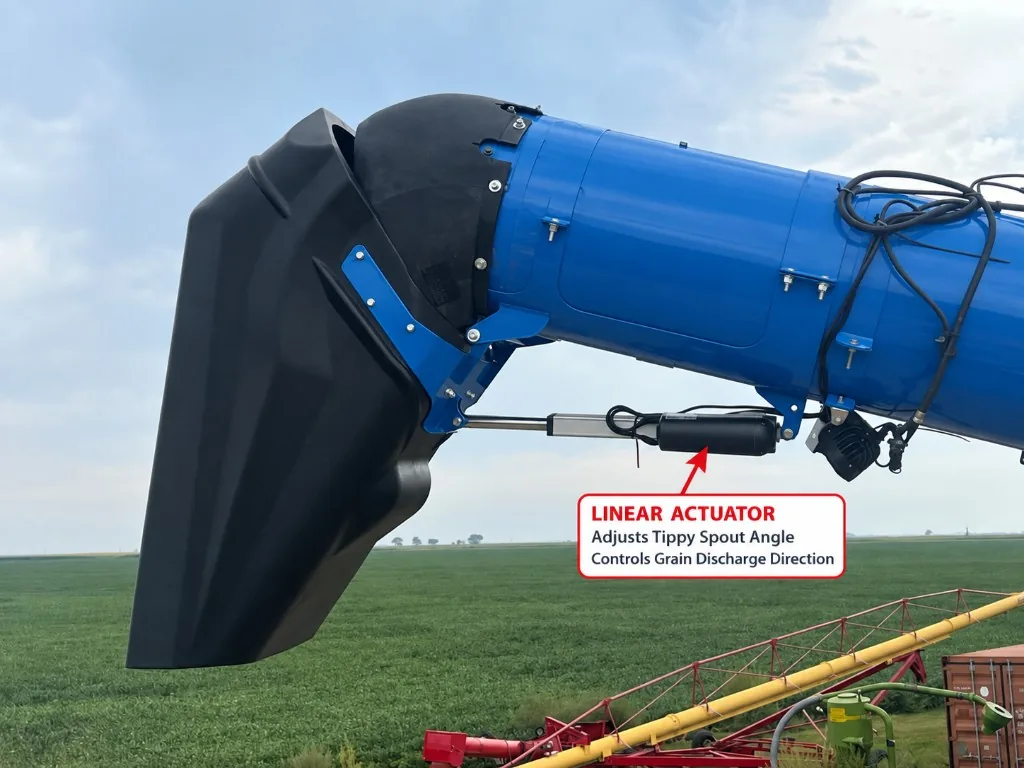
How an Electric Linear Actuator Adjusts an Unloading Auger Tippy Spout
Learn how an electric linear actuator can adjust an unloading auger tippy spout to improve grain discharge direction and trailer loading control.
قراءة المقال ←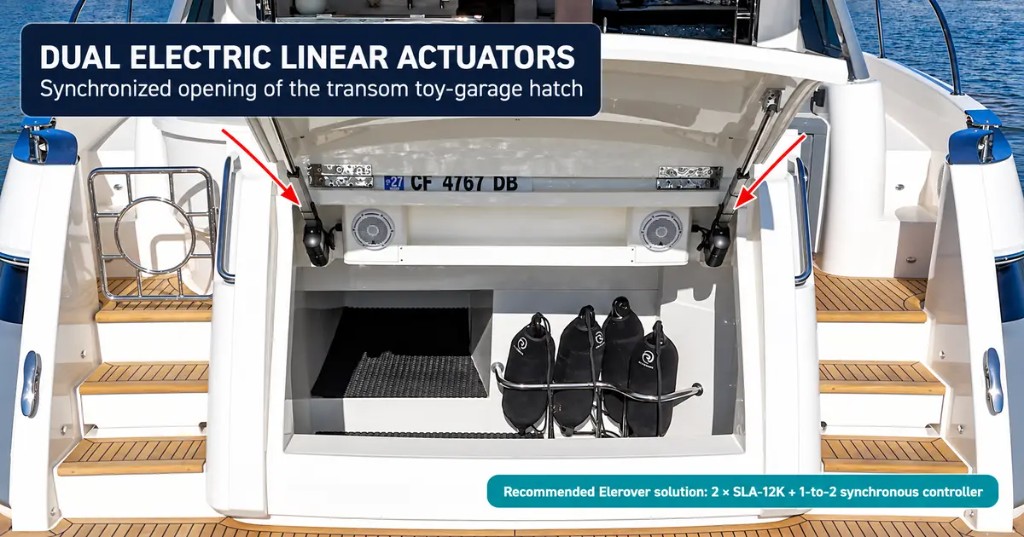
Dual Linear Actuators for Yacht Toy-Garage Hatches | SLA-12K
See how two synchronized electric linear actuators can open a yacht transom toy-garage hatch and how Elerover configures the SLA-12K system.
قراءة المقال ←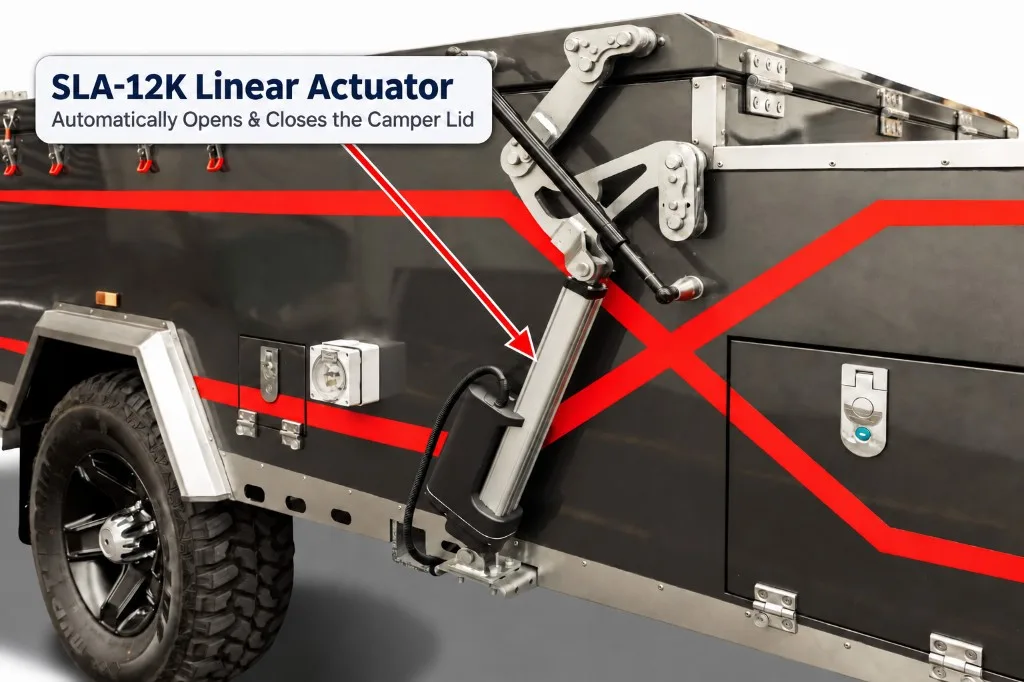
SLA-12K Linear Actuator for Automatic Camper Trailer Lids
See how a 12V or 24V SLA-12K heavy-duty linear actuator can automate the opening and closing of camper trailer lids and folding roof systems.
قراءة المقال ←