SLA-T01-M vs SLA-T01-W: Which Compact Actuator Fits Your Design?
Compare SLA-T01-M and SLA-T01-W micro linear actuators—mounting style, space constraints and typical OEM use cases.
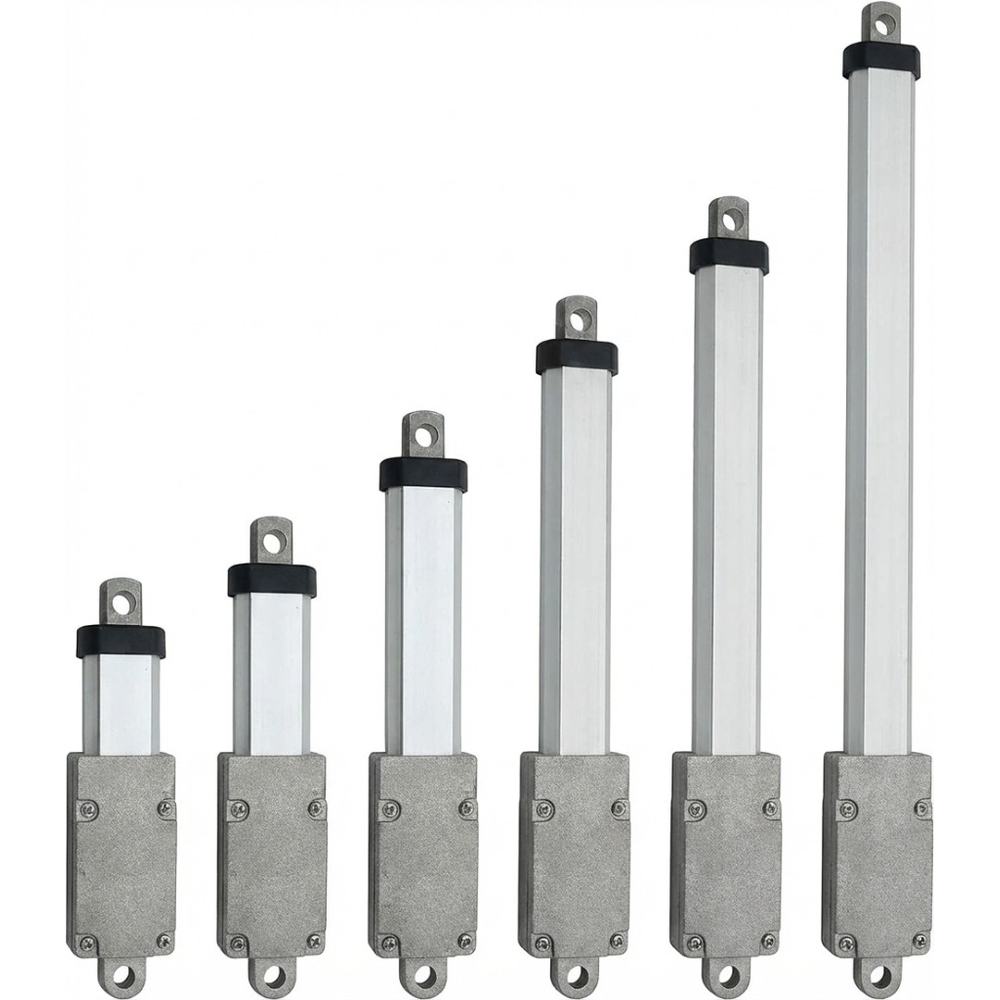
Introduction
Compact motion modules decide whether an OEM product feels refined or unfinished. When engineers shortlist miniature drives, two Elerover options appear often: SLA-T01-M and SLA-T01-W. Both belong to the same micro linear actuator family and share a similar performance envelope, but they solve different mechanical packaging problems.
This comparison matters because mounting is frequently the real bottleneck. Force and voltage may look acceptable on a datasheet, yet the actuator still fails fitment if the frame has no room for end clevis pivots or needs side-bolt fastening. As smart furniture, robotics accessories, and compact automation grow, buyers want an electric motor driven actuator that installs quickly without migrating to a bulkier hydraulic pump architecture.
Below you will find a practical side-by-side view of SLA-T01-M versus SLA-T01-W, shared specifications, selection guidance, and application examples that help purchasing and design teams choose confidently before freezing CAD and tooling.
SLA-T01-M at a Glance
SLA-T01-M is a micro actuator with a clean clevis-style mounting layout. It is a good fit when:
- You need a slim body for robotics or model systems
- End-to-end clevis mounting is preferred
- Installation space is limited but side flanges are not required
- The surrounding mechanism already provides accurate pivot points
Explore the series: SLA-T01-M linear actuator.
In many OEM layouts, SLA-T01-M behaves like a miniature turnkey push rod: mount the ends, connect DC power, and validate stroke clearances. That simplicity is valuable for rapid prototyping and for products where the motor body should remain visually minimal.
SLA-T01-W at a Glance
SLA-T01-W adds side mounting flanges on the motor housing. Choose it when:
- The machine frame needs side-bolt mounting
- Narrow channels still require secure flange fastening
- You want both clevis ends and flange holes for flexible assembly
- Vibration or side loading makes a single clevis path less stable
Explore the series: SLA-T01-W linear actuator.
Flange mounting can reduce tolerance stack-up during mass assembly. Factory teams often prefer it when fixtures locate the actuator body first, then connect the rod end to the moving panel or linkage. That sequence also makes incoming quality checks easier on the production line.
Shared Spec Highlights
| Spec | Typical value |
|---|---|
| Voltage | 6V / 12V / 24V DC |
| Max load | up to 188N |
| Max speed | up to 150mm/s |
| Protection | IP54 (indoor recommended) |
Both models are intended for indoor or protected environments. If your product faces rain, wash-down, or outdoor dust, discuss higher IP packages from other Elerover families rather than forcing an IP54 micro actuator into the wrong duty.
Key Advantages
- Same performance class, two mounting strategies — keep electrical specs consistent while optimizing mechanical fit
- Compact footprint for dense assemblies — useful in furniture frames, compact robotics, and small automation modules
- DC electric motor integration — works with common 6V/12V/24V control systems without hydraulic infrastructure
- OEM customization path — cable, connector, labeling, and packaging can follow private-label requirements
- Faster design iteration — evaluate M versus W mounting on the same stroke/load target before freezing tooling
Application Scenarios
Furniture OEMs use SLA-T01-M when a recliner or cabinet linkage already has clevis points and needs a discreet drive. The same team may switch to SLA-T01-W for a TV-lift channel where the motor body must be bolted to sheet metal before the panel is closed. In educational robotics and compact demonstrators, SLA-T01-M is often preferred because it behaves like a classic miniature cylinder with simple end mounts.
Industrial accessory makers sometimes choose SLA-T01-W for inspection fixtures, light gates, or sample handlers where flange holes improve repeatability on aluminum extrusion. In both cases, the actuator replaces messy fluid systems: there is no remote hydraulic pump, no hose routing, and no oil maintenance. The result is quieter operation and simpler compliance documentation for indoor equipment.
When projects grow beyond 188N, these micro models remain useful as reference architecture. Teams can keep the same mounting philosophy and step up to a higher-force linear actuator series while preserving connector standards and controller logic.
Recommendation
- Choose SLA-T01-M for compact clevis-mounted motion modules.
- Choose SLA-T01-W when flange mounting improves assembly strength and alignment.
- Confirm stroke, retracted length, duty cycle, and cable exit direction before locking the CAD envelope.
- If you need synchronized multi-axis motion later, plan controller and feedback options during the sample stage.
Conclusion
SLA-T01-M and SLA-T01-W prove that small mounting details can decide an entire OEM design path. Both deliver compact electric linear motion; the better choice is the one that installs cleanly in your frame and stays stable under real duty cycles. Taking one extra day to compare mounting drawings usually saves weeks of enclosure redesign later. Need help selecting a model? Send an inquiry with your stroke, load, voltage, and mounting drawing. Elerover can recommend the right micro actuator variant and support customized samples for your next pilot run.
FAQ
What is the main difference between SLA-T01-M and SLA-T01-W?
Both are compact 188N-class micro actuators. SLA-T01-M uses a clevis-style mounting layout, while SLA-T01-W adds side mounting flanges on the motor housing.
When should I choose SLA-T01-W?
Choose SLA-T01-W when the machine frame needs side-bolt flange mounting or when flange holes improve assembly strength and alignment in narrow channels.
Do SLA-T01-M and SLA-T01-W share the same voltage and load range?
Yes. Typical shared specs include 6V / 12V / 24V DC, up to 188N load, speeds up to 150mm/s, and IP54 protection for indoor use.
Can both models be customized for OEM cable and connector requirements?
Yes. Elerover can support cable length, plug type, labeling, and packaging changes for private-label and wholesale programs.
Are these actuators a replacement for a hydraulic pump in furniture?
For light indoor motion, yes in most cases. A compact electric linear actuator avoids oil systems and integrates more easily with handsets and DC electric motor controls.
المزيد من المقالات
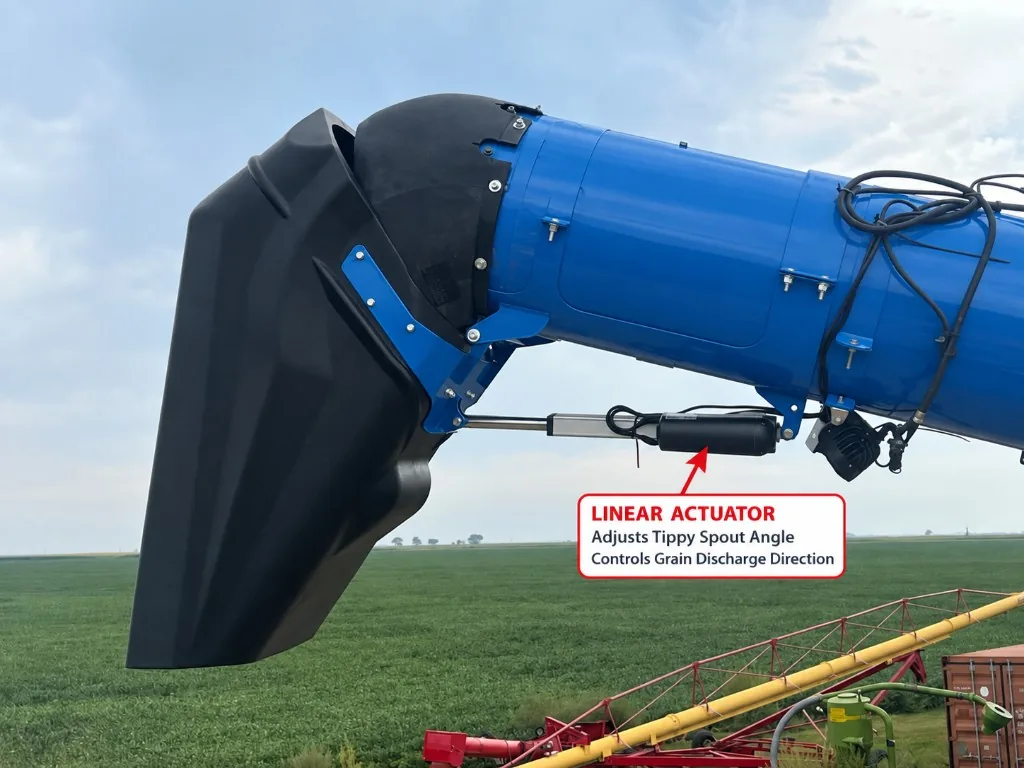
How an Electric Linear Actuator Adjusts an Unloading Auger Tippy Spout
Learn how an electric linear actuator can adjust an unloading auger tippy spout to improve grain discharge direction and trailer loading control.
قراءة المقال ←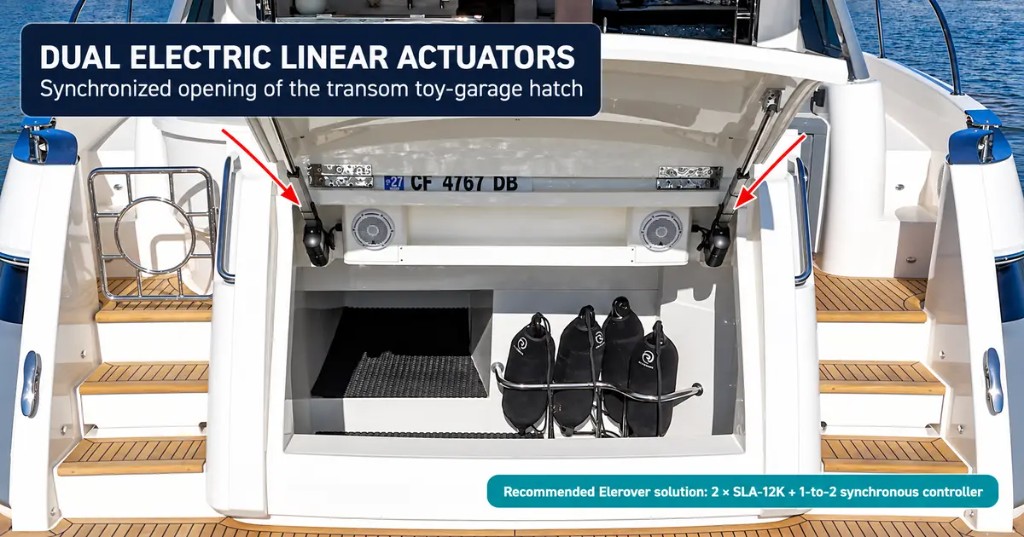
Dual Linear Actuators for Yacht Toy-Garage Hatches | SLA-12K
See how two synchronized electric linear actuators can open a yacht transom toy-garage hatch and how Elerover configures the SLA-12K system.
قراءة المقال ←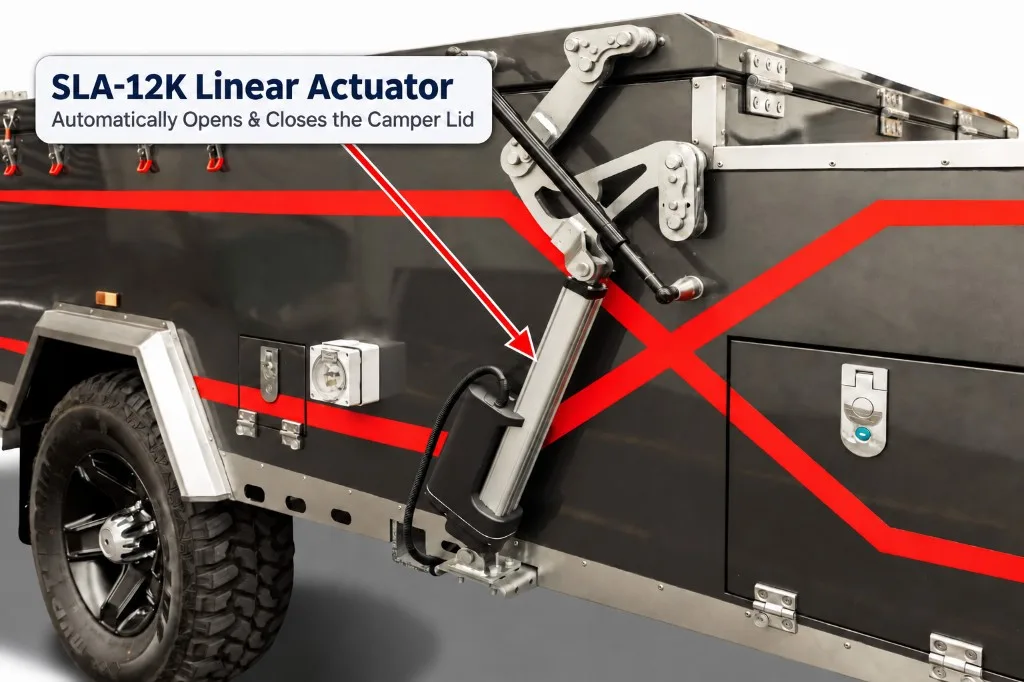
SLA-12K Linear Actuator for Automatic Camper Trailer Lids
See how a 12V or 24V SLA-12K heavy-duty linear actuator can automate the opening and closing of camper trailer lids and folding roof systems.
قراءة المقال ←