SLA-HP250 Hydraulic Pump for Medical Beds: Self-Contained Lifting for Care Equipment
Elerover SLA-HP250 self-contained hydraulic actuator for medical beds—up to 10 kN dynamic push force, 80–400 mm stroke, flow-control descent, key features, mounting dimensions, and patient-handling applications.
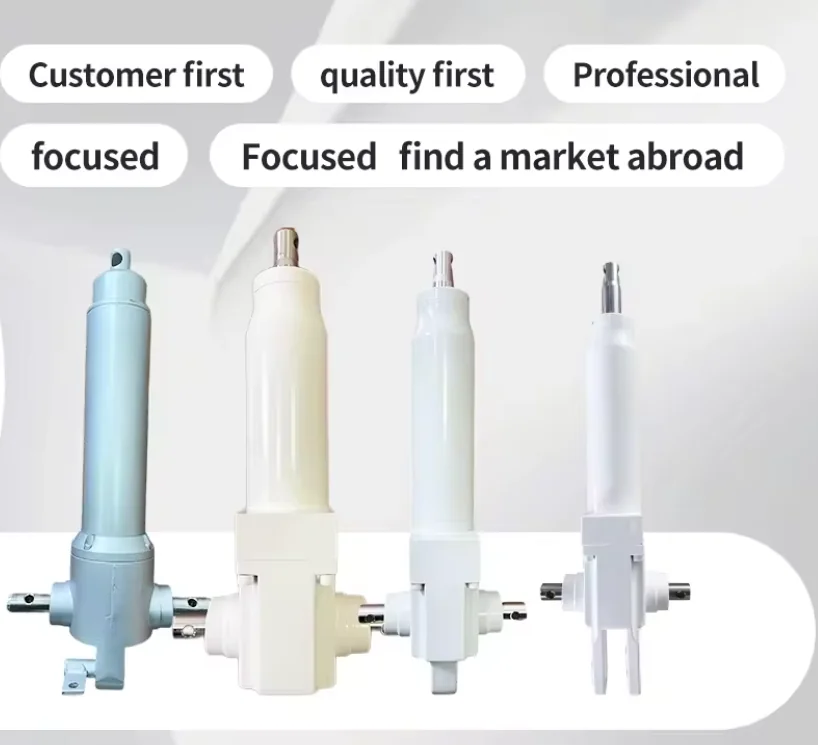
Introduction
When caregivers adjust a medical bed or patient-handling platform, ease of operation and consistent performance matter as much as raw force. Many OEM frames still prefer a compact self-contained hydraulic module—especially where foot-pedal control, reliable load holding, and simple installation outweigh a fully electric drive.
Elerover’s SLA-HP250 is a hydraulic pump for medical bed systems: a self-contained hydraulic actuator that integrates pump, cylinder, valves, and reservoir into one compact unit. This article covers the published ratings, caregiver-facing features, mounting geometry, typical applications, and how to prepare an OEM application review.
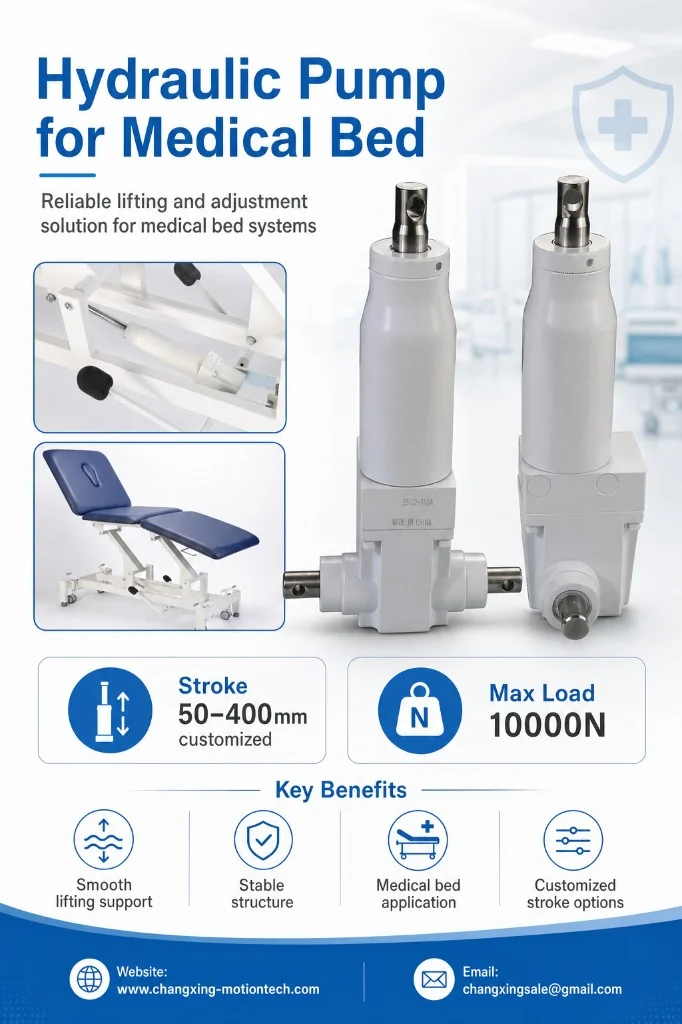
What Is the SLA-HP250?
The SLA-HP250 is a self-contained hydraulic actuator for patient handling and lifting devices. Instead of routing hoses to a remote power pack, the hydraulic circuit lives inside a compact module that mounts into the bed or table frame.
That architecture is intended to deliver:
- A smart, integrated layout—pump, cylinder, valves, and reservoir in one package
- Years of dependable service with a zero-maintenance-oriented design
- Smooth descent via an installed pressure-relief and flow-control valve path, independent of patient weight
- No external power source for core lift and lower—fully manual / foot operation
If you already have installation drawings from another supplier, treat SLA-HP250 as an engineering-review product. Share geometry for confirmation rather than assuming drop-in interchange with any third-party model.
Published Specifications
| Spec | Value |
|---|---|
| Stroke lengths | 80–400 mm (3.1–15.7 in), multiple options / customizable |
| Maximum dynamic push force | Up to 10 kN (≈ 2,248 lbs) |
| Descent control | Flow-control valve |
| Overload protection | Pressure-relief valve installed |
| Cylinder type | Single-acting cylinder |
| Operation | Manual / foot pump; no external power required |
| Architecture | Self-contained (pump + cylinder + valves + reservoir) |
Use these ratings as a selection starting point. Final suitability still depends on mounting leverage, retracted/extended envelope, pedal ergonomics, and the regulatory path of the finished medical device.
Key Features for Caregivers and OEMs
Published feature themes for the SLA-HP250 platform include:
- Zero-maintenance design
- Easy to install
- Compact self-contained design
- Quiet and smooth performance
- Reliable load-holding capability
- Simple installation and operation
- No external source of power required
- Fully manual / foot operation
- Manual override / hand-release option
- Lower overall equipment maintenance and cost of ownership for end users
From a medical-bed marketing view, the same story is often summarized as smooth lifting support, stable structure, medical-bed application fit, and customized stroke options.
Mounting Geometry and Pedal Motion
Reference envelope numbers from the product drawing help mechanical layout before CAD freeze:
| Dimension / motion | Reference value |
|---|---|
| Main body length (pivot to cylinder end) | 252 ± 2 mm |
| Mounting width across flanges | about 160 mm overall; 110 mm between flanges |
| Cylinder diameter | ø50 mm |
| Mounting pin | ø18h9 with ø6 through-hole |
| Base / housing width | about 80 mm (secondary width about 50 mm) |
| Pump stroke (pedal) | 31°–36° |
| Free stroke | 2°–5° |
| Release stroke | 6°–10° |
Confirm every dimension against the drawing revision issued for your build. Pedal angles matter for caregiver ergonomics; pin and flange spacing matter for frame welding and bracket design.
How SLA-HP250 Looks in Production
In factory views, the actuator appears as a clean white or industrial-finish module with a polished rod and clear mounting interfaces—important when mechanisms sit near bedding and caregivers.
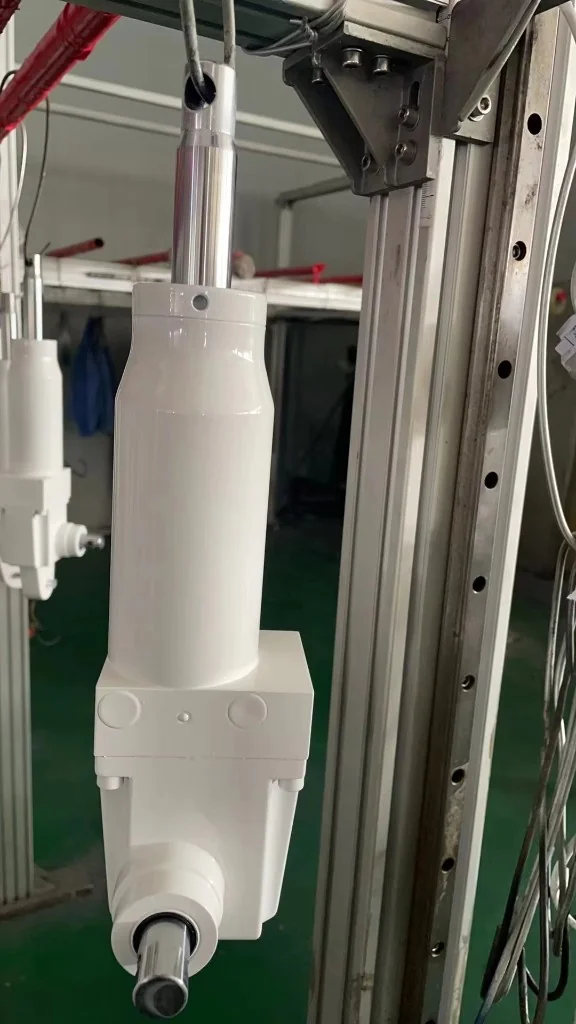
Batch production views show consistent housings and mounting pins across units, which helps spare-part planning and multi-plant assembly.
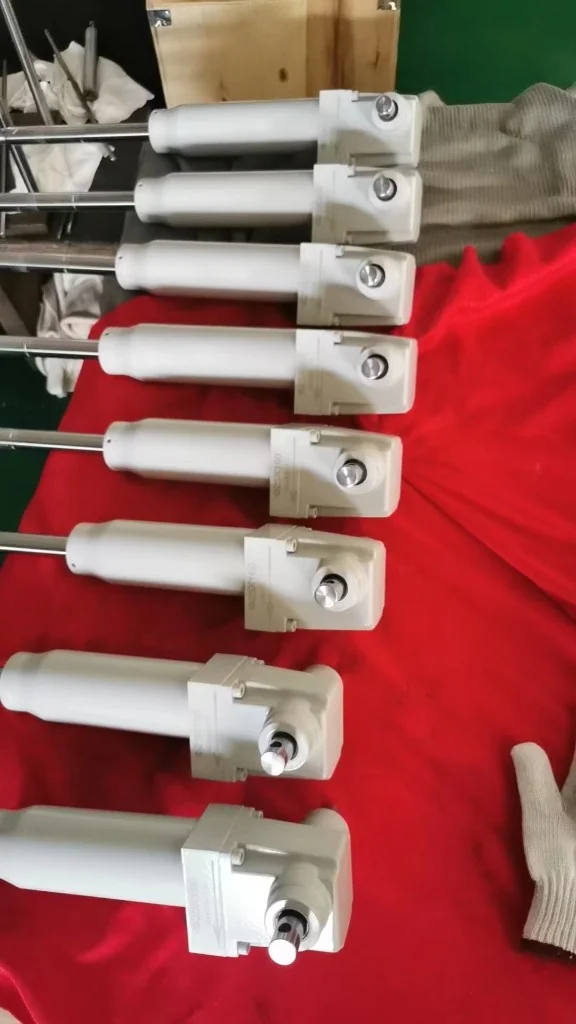
Typical Applications in Patient Handling
SLA-HP250 is intended for care-equipment platforms where hydraulic lift supports patient comfort and caregiver ergonomics:
- Hospital beds
- Home-care beds
- Patient lifting devices
- Examination couches
- Physiotherapy tables
- Chairs
- Unique / custom patient-handling applications
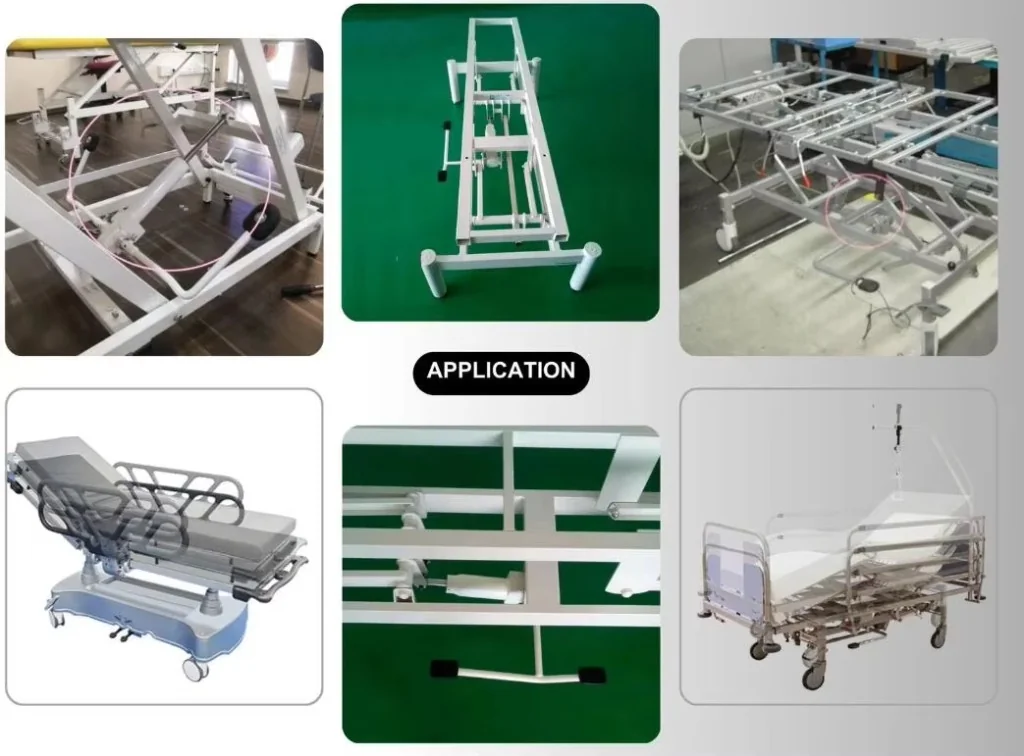
The collage below shows how hydraulic modules sit inside scissor frames, multi-section bed chassis, stretchers, and hospital-bed assemblies—height adjustment, section motion, and overall platform lift all benefit from a compact self-contained drive.
When you map an application, ask:
- Is the load vertical push, hinged, or scissor-amplified?
- What stroke (within 80–400 mm) and retracted length does the frame allow?
- Do caregivers need foot-pedal lift plus a hand-release path?
- Are optional extras required for the frame interface?
Optional OEM Configuration Items
Beyond the base actuator, OEM programs can discuss:
- Holes on the pedal shaft
- Mounting brackets
- Suction tube
- Different actuator colors
These options should be confirmed against the equipment design rather than assumed as standard on every SKU. Equipment OEMs remain responsible for system-level regulatory assessment of the finished medical device.
How to Prepare an Application Review
Send the following with your RFQ so engineering can map a published configuration:
- Application type (hospital bed, home-care bed, lifting device, couch, table, chair, other)
- Required load and unit (N, kg, or lbs), plus geometry notes if the load is hinged
- Required stroke within 80–400 mm (or a custom request outside that window)
- Retracted length / mounting envelope
- Pedal, release, and mounting preferences
- Desired descent behavior
- Quantity / annual volume
- Optional extras (brackets, suction tube, color)
- Document needs (datasheet, 2D drawing, STEP / CAD)
Browse the product page for SLA-HP250 Self-Contained Hydraulic Actuator and submit an application review through the contact form. Document downloads are confirmed after review when files are available for your configuration.
Closing
For medical-bed OEMs, the SLA-HP250 offers a clear package: self-contained hydraulic lifting, up to 10 kN dynamic push force, 80–400 mm stroke options, flow-control descent, manual/foot operation without external power, and mounting geometry that can be checked early in CAD. Pair the published ratings with a real frame layout, and caregivers get smoother adjustment with stable patient support.
If you are designing or refreshing a medical bed platform, start with the SLA-HP250 product page and share your load case for a factory application review.
FAQ
What is the SLA-HP250?
SLA-HP250 is Elerover’s self-contained hydraulic actuator for medical beds and patient-handling equipment. It integrates pump, cylinder, valves, and reservoir into one compact, maintenance-oriented unit for reliable lifting and adjustment without a separate hydraulic power pack.
How much dynamic push force can SLA-HP250 deliver?
Published ratings list maximum dynamic push force up to 10 kN (about 2,248 lbs). Confirm your real load case, lever arm, and duty cycle during application review.
What stroke lengths are available?
Stroke options are customizable between 80 mm and 400 mm (about 3.1–15.7 in). Share retracted length, extended length, and mounting envelope with your RFQ.
How does descent control work?
The unit includes a flow-control valve for smooth descent independent of patient weight, plus an installed pressure-relief valve for overload protection.
Does SLA-HP250 need external electric power?
No external power source is required for core lift and lower. Operation is fully manual / foot-driven, with a manual override / hand-release option available for OEM packages.
Where is SLA-HP250 typically used?
Typical uses include hospital beds, home-care beds, patient lifting devices, examination couches, physiotherapy tables, chairs, and other unique patient-handling applications.
How do I request drawings or a quote?
Open the SLA-HP250 product page and submit an application review with required load, stroke, mounting envelope, pedal requirements, and quantity. The team can confirm document availability and configuration after review.
더 많은 글
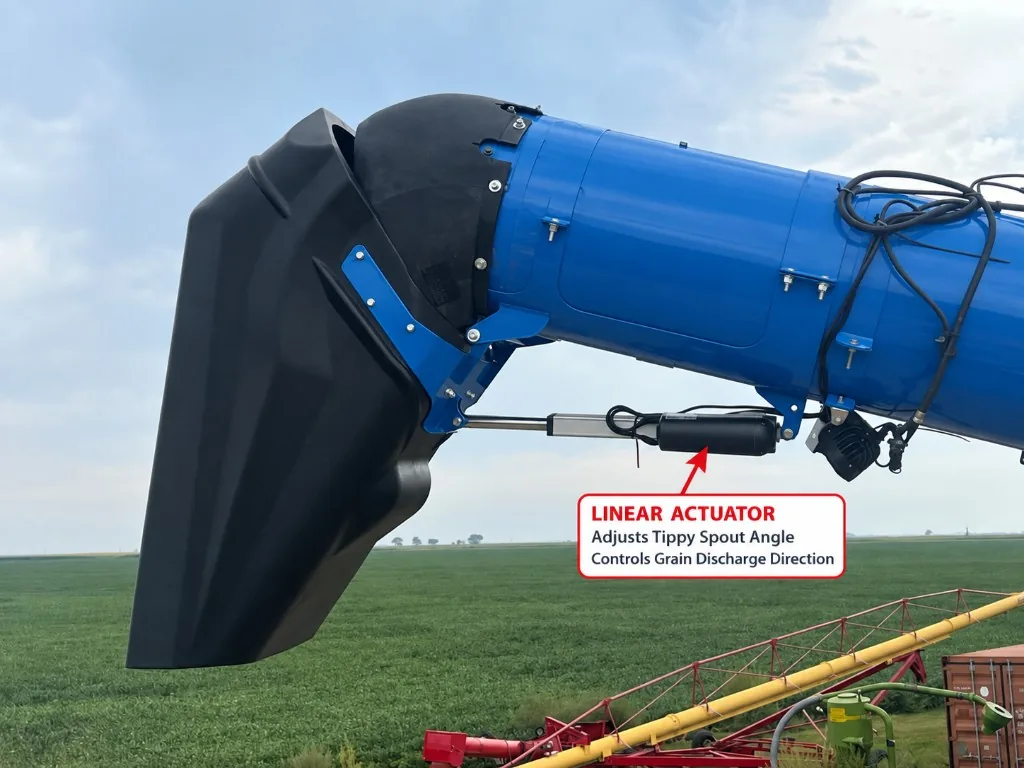
How an Electric Linear Actuator Adjusts an Unloading Auger Tippy Spout
Learn how an electric linear actuator can adjust an unloading auger tippy spout to improve grain discharge direction and trailer loading control.
글 읽기 →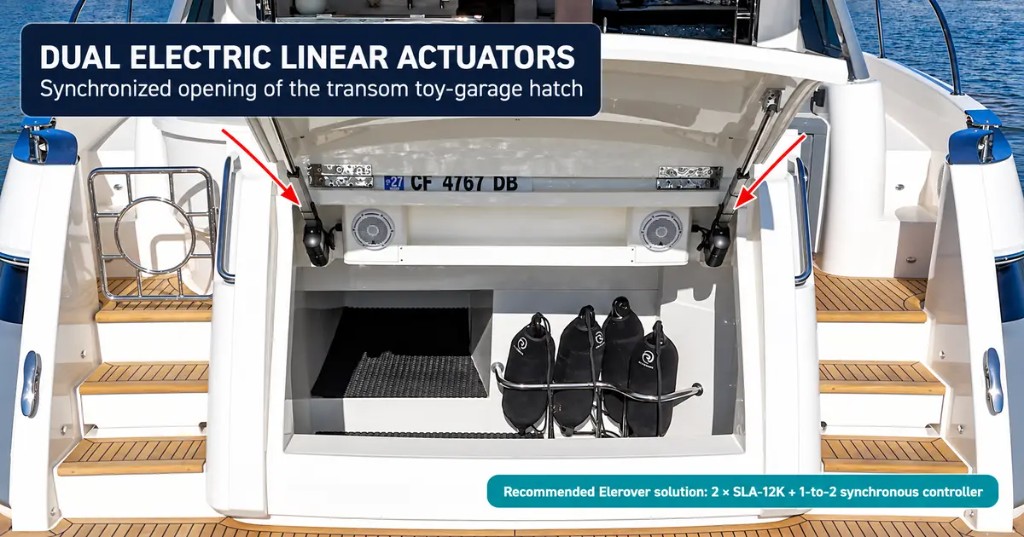
Dual Linear Actuators for Yacht Toy-Garage Hatches | SLA-12K
See how two synchronized electric linear actuators can open a yacht transom toy-garage hatch and how Elerover configures the SLA-12K system.
글 읽기 →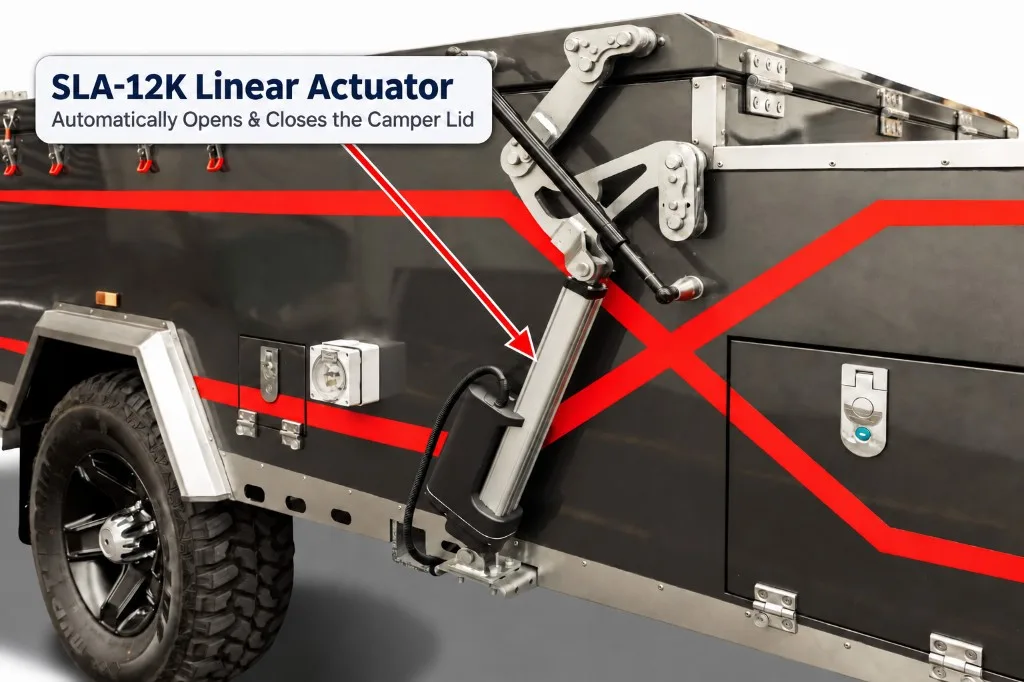
SLA-12K Linear Actuator for Automatic Camper Trailer Lids
See how a 12V or 24V SLA-12K heavy-duty linear actuator can automate the opening and closing of camper trailer lids and folding roof systems.
글 읽기 →