12000 N High-Performance Linear Actuator for Heavy OEM Motion
A practical introduction to Elerover’s 12000 N heavy-duty electric linear actuator family—force class, stroke options, installation dimensions, and typical industrial applications.
Introduction
When an OEM project outgrows light furniture actuators, the next bottleneck is usually force—not electronics. Cellar doors, hatch covers, solar trackers, and agricultural implements need controlled push/pull that stays predictable under shock, weather, and long service intervals. A 12000 N high-performance electric linear actuator fills that gap without adding a separate hydraulic power unit for every axis.
This article introduces Elerover’s heavy-duty SLA-12K family: what the force class means in practice, how stroke options are packaged, how to read the installation drawing, and which applications fit this platform best. Specs below follow published product data—share your duty cycle if you need engineering confirmation for a hinged or continuous load.
Why 12000 N Matters for OEM Design
- Industrial force class — up to about 12000 N / 1200 kg / 2700 lbs at the slowest published speed option
- 12 V / 24 V DC — fits common vehicle, marine, and industrial control architectures
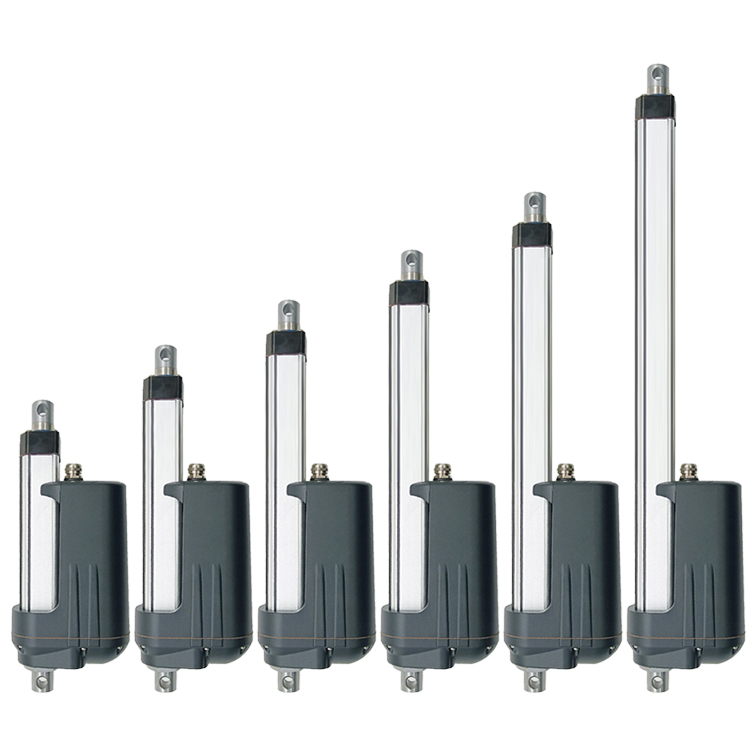
- Stroke ladder — standard lengths from short cellar-door packages through longer hatch and tracker strokes
- Clevis mounting — Φ13 mm eyes front and rear for pin-joint installation
- Built-in limit switches — automatic stop at full extend and retract
- IP66 sealing — dust-tight housing with water-jet protection for outdoor-adjacent duty
- Optional feedback — Hall or potentiometer packages for synchronized or position-aware control
- Manual override — emergency motion when power is unavailable
These traits make the platform a practical step-up from mid-force actuators when packaging still needs an electric drive instead of a full hydraulic circuit.
Stroke Range at a Glance
The family shares one mechanical architecture and scales primarily by stroke. That keeps mounting interfaces consistent while letting purchasing stock the travel length each machine needs.
Typical stroke options span roughly 50 mm to 700 mm, with custom lengths available for OEM programs. Longer strokes still use the same clevis pattern and outer-tube envelope, which simplifies CAD libraries and spare-part planning.
When you select stroke, also check:
- Travel time — faster gearings reduce max thrust
- Hinged loads — cellar doors and hatches often need 2–5× the lid weight at the actuator
- Duty cycle — continuous full-load running is not recommended; plan for intermittent service
Installation Dimensions
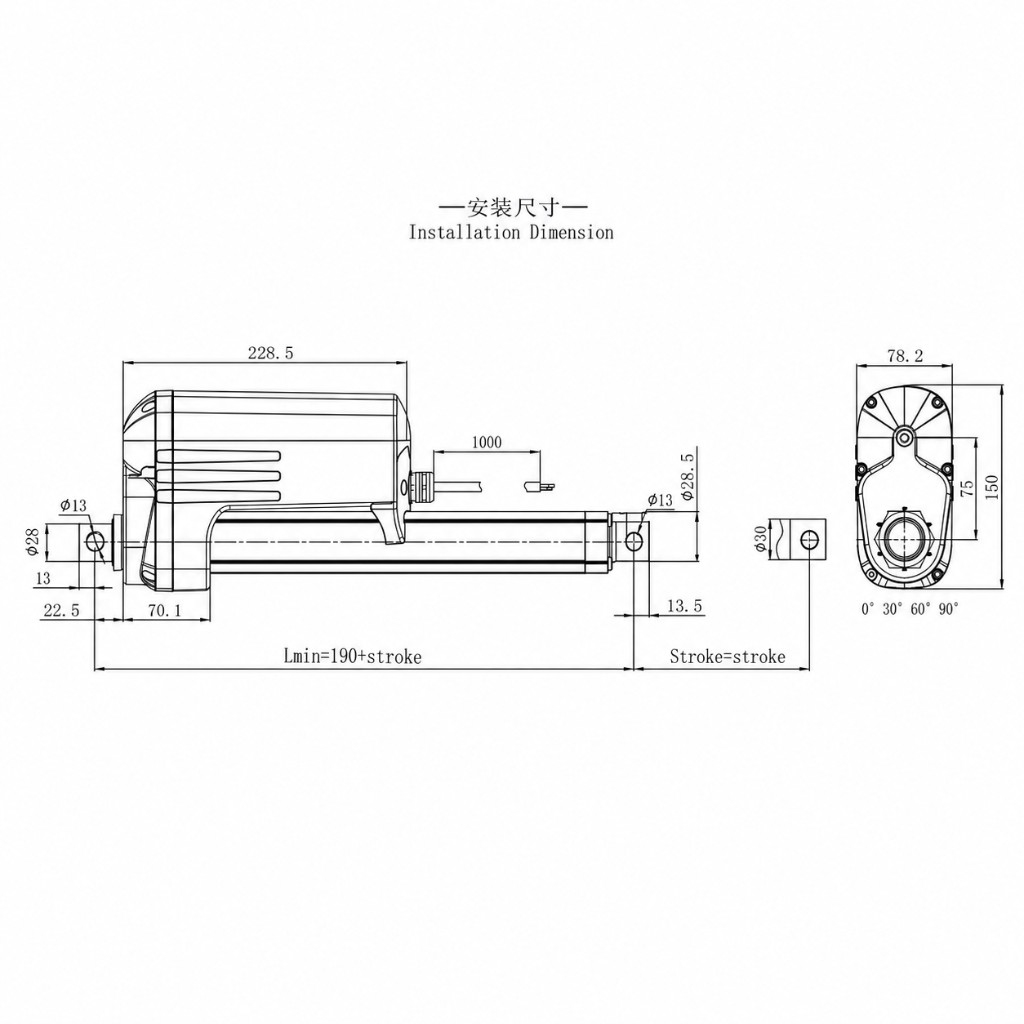
Key published envelope numbers for mechanical layout:
| Dimension | Value |
|---|---|
| Retracted center-to-center length | Lmin = 190 mm + stroke |
| Housing length (gear / motor section) | about 228.5 mm |
| Overall height | 150 mm |
| Overall width | about 78.2 mm |
| Outer tube diameter | about Φ28.5 mm |
| Mounting hole | Φ13 mm (front and rear clevis) |
| Clevis body diameter | about Φ28 mm |
| Cable length | 1000 mm typical |
| Rear clevis orientation | 0° / 30° / 60° / 90° options |
Example: a 50 mm stroke package retracts to about 240 mm center-to-center and extends to about 290 mm. Keep cable routing clear of the moving tube and confirm rear clevis angle before welding brackets.
Speed Versus Load
Different internal ratios trade thrust for speed. Use the published ladder as a selection starting point (values are approximate maximums for vertical push under intermittent duty):
| No-load speed | Full-load speed (approx.) | Max thrust | Self-lock (approx.) |
|---|---|---|---|
| 6 mm/s | 5 mm/s | 12000 N | 15000 N |
| 8 mm/s | 6 mm/s | 11000 N | 12000 N |
| 12 mm/s | 9 mm/s | 10000 N | 12000 N |
| 16 mm/s | 10 mm/s | 7000 N | 8000 N |
| 20 mm/s | 11 mm/s | 6500 N | 8000 N |
| 25 mm/s | 14 mm/s | 5000 N | 6000 N |
| 38 mm/s | 24 mm/s | 3200 N | 4000 N |
| 60 mm/s | 30 mm/s | 2000 N | 3000 N |
Working speed falls as load rises. Prefer sizing so normal duty sits below the absolute maximum thrust—service life usually improves when the actuator is not held at peak load for the entire stroke.
Typical Applications
- Cellar doors, trapdoors, and hatchways
- Solar tracking and outdoor positioning frames
- Agricultural machinery and dump / lift implements
- Marine hatches and deck equipment
- Elevator platforms and industrial lifting tables
- Construction gates and heavy access panels
If your load is hinged, measure geometry early. A lid that “only weighs 200 kg” can still demand several thousand newtons at the actuator depending on lever arm and opening angle.
How to Specify an OEM Package
Send the following with your RFQ so engineering can map a published configuration:
- Required push/pull force (or lid mass + hinge geometry)
- Useful stroke and preferred travel time
- Supply voltage and controller type
- IP / wash-down expectations
- Need for Hall or potentiometer feedback
- Annual quantity and sample timing
Elerover can align stroke, voltage, feedback, cable length, and connectors to your enclosure.
Closing
A 12000 N electric linear actuator is not a furniture micro-drive scaled up—it is a different force class with its own mounting math, current draw, and duty limits. The SLA-12K family gives OEM teams a clear envelope (Lmin = 190 + stroke), IP66 sealing, clevis interfaces, and a published speed/load ladder so mechanical and electrical design can move together.
Browse the linear actuator category or open an SLA-12K product page to compare stroke packages, then send your load case through the contact form for a factory quote.
FAQ
What force class does this high-performance actuator family cover?
The platform is rated up to about 12000 N (roughly 2700 lbs / 1200 kg) at the slowest speed option. Faster gearings trade thrust for travel time.
Which DC voltages are supported?
Standard packages use 12 V or 24 V DC. Higher DC options can be discussed for OEM programs when duty cycle and cable sizing allow.
How do I estimate retracted installation length?
Use Lmin ≈ 190 mm + stroke for center-to-center clevis mounting. For example, a 50 mm stroke typically needs about 240 mm retracted and 290 mm extended.
What protection rating should I expect outdoors?
IP66 dust-tight and water-jet protection is the published sealing class for this family. Confirm seals and cable glands against your wash-down or outdoor exposure.
Where is this actuator typically used?
Common OEM uses include cellar doors and trapdoors, hatchways, solar tracking, agricultural equipment, marine hatches, and industrial lifting tables.
Plus d’articles
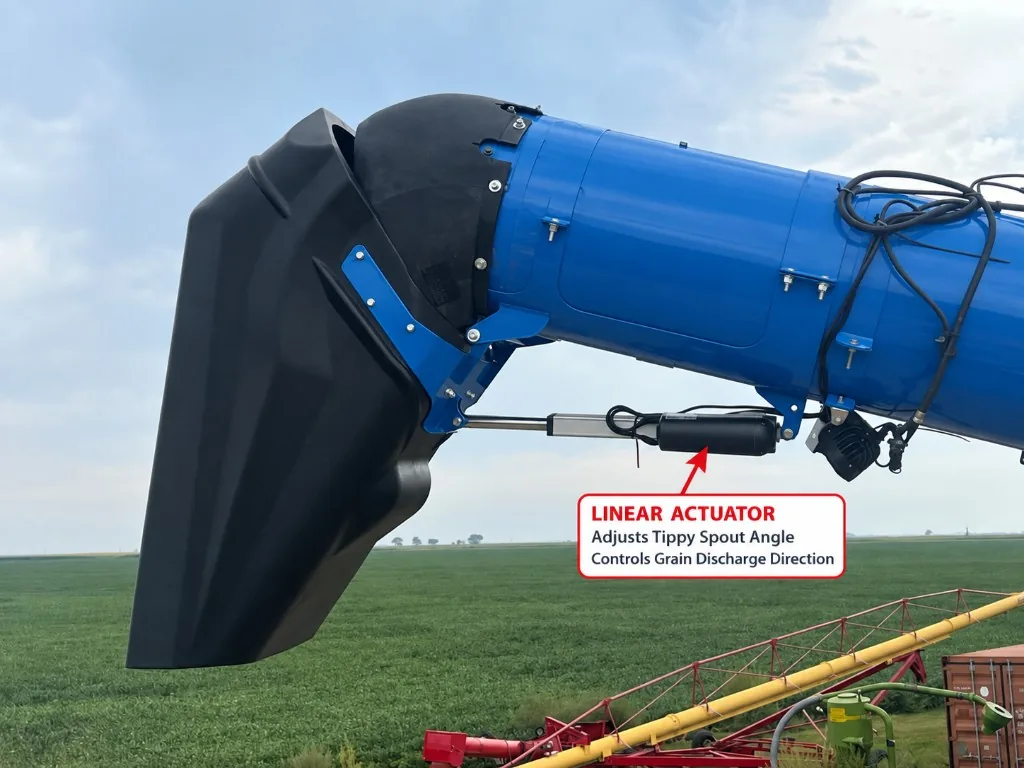
How an Electric Linear Actuator Adjusts an Unloading Auger Tippy Spout
Learn how an electric linear actuator can adjust an unloading auger tippy spout to improve grain discharge direction and trailer loading control.
Lire l’article →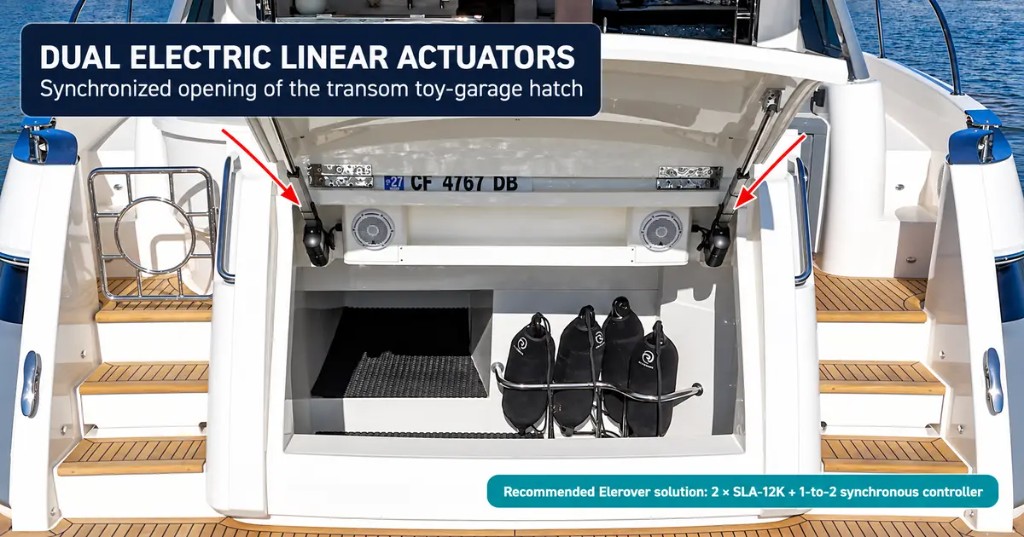
Dual Linear Actuators for Yacht Toy-Garage Hatches | SLA-12K
See how two synchronized electric linear actuators can open a yacht transom toy-garage hatch and how Elerover configures the SLA-12K system.
Lire l’article →
SLA-12K Linear Actuator for Automatic Camper Trailer Lids
See how a 12V or 24V SLA-12K heavy-duty linear actuator can automate the opening and closing of camper trailer lids and folding roof systems.
Lire l’article →